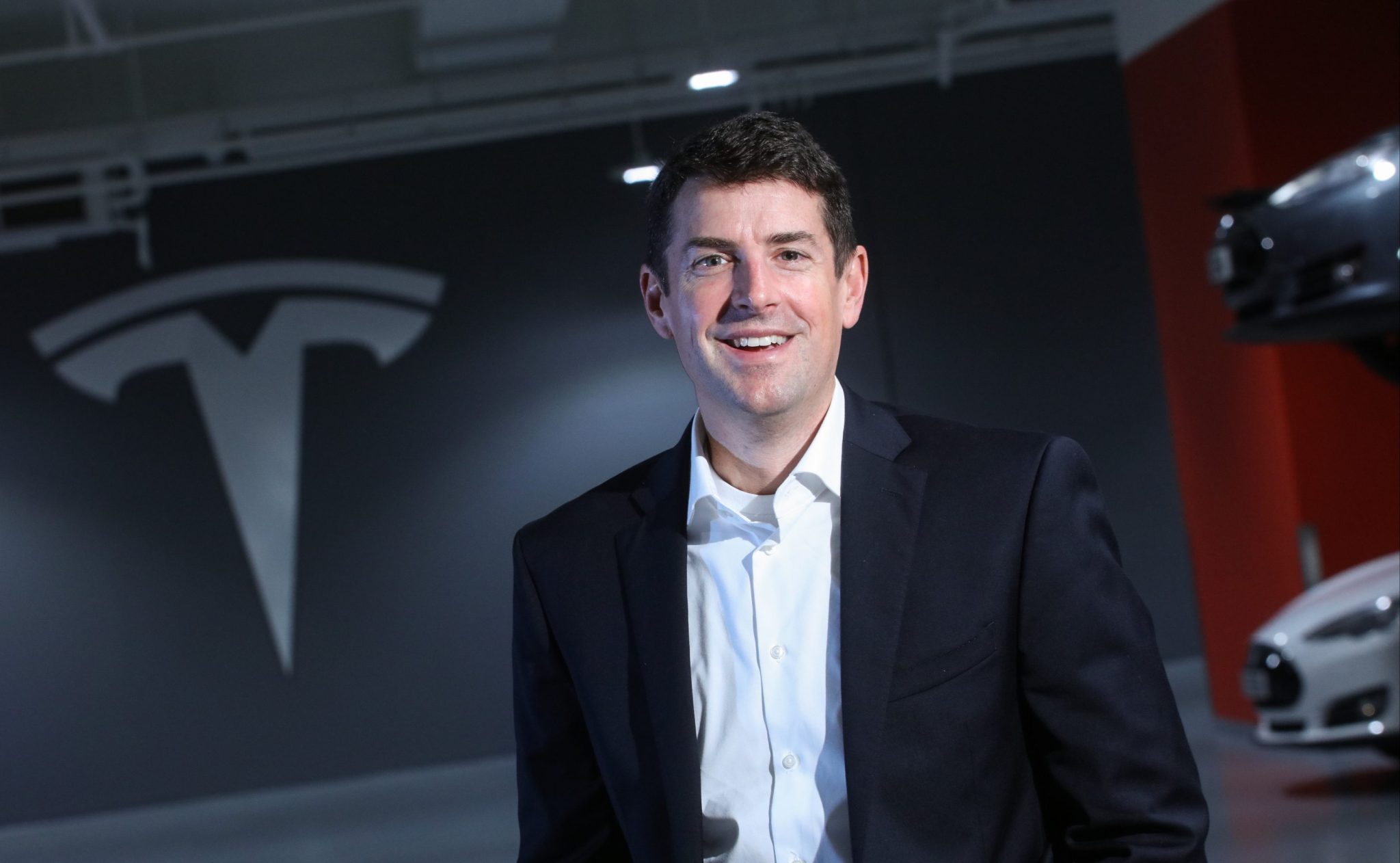
Former Tesla president shares the secret to success he learned from his former boss, Elon Musk: ‘He demands to only work with world-class talent’
With a sprawling empire spanning electric vehicles, rockets, artificial intelligence, and social media, Elon Musk has built a reputation as one of the most influential—and unconventional business leaders of the modern era. And as Space X eyes a potentially record-setting public offering, the billionaire’s path to potentially becoming the world’s first trillionaire is once again fueling fascination with how he built his success. But few people have witnessed how Musk operates up close quite like Jon McNeill. As Tesla’s president from 2015 to 2018, he worked alongside Musk during one of the company’s most pivotal stretches, helping oversee the rollout of the Model X and the turbulent production ramp-up of the Model 3—a period when Tesla came perilously close to bankruptcy. However, the success of Musk, and subsequently Tesla, wasn’t necessarily driven by charisma, luck, or even raw intelligence alone, according to McNeill. Instead, it came from an obsessive willingness to challenge assumptions. “He’s a pretty uniquely-wired individual, obviously,” McNeill told Fortune, reflecting on his former boss. “He’s thinking about stuff at a depth, constantly, and he frees up time in his day to think about these big challenges, and then figures out a way to go after them.” While Musk’s leadership style can often appear chaotic from the outside, McNeill said there was a repeatable logic behind it. In his book, The Algorithm, he distilled Musk’s operating philosophy into a five-step framework: Question every requirement, Delete every possible step in the process, Simplify and optimize, Accelerate cycle time, Automate last. The framework proved integral during Tesla’s growth years, McNeill recalled, helping solve manufacturing bottlenecks tied to the Model X and scale the company from roughly $2 billion in revenue to $20 billion. And since leaving Tesla, McNeill has carried the philosophy throughout the rest of his career—from serving as chief operating officer at Lyft t