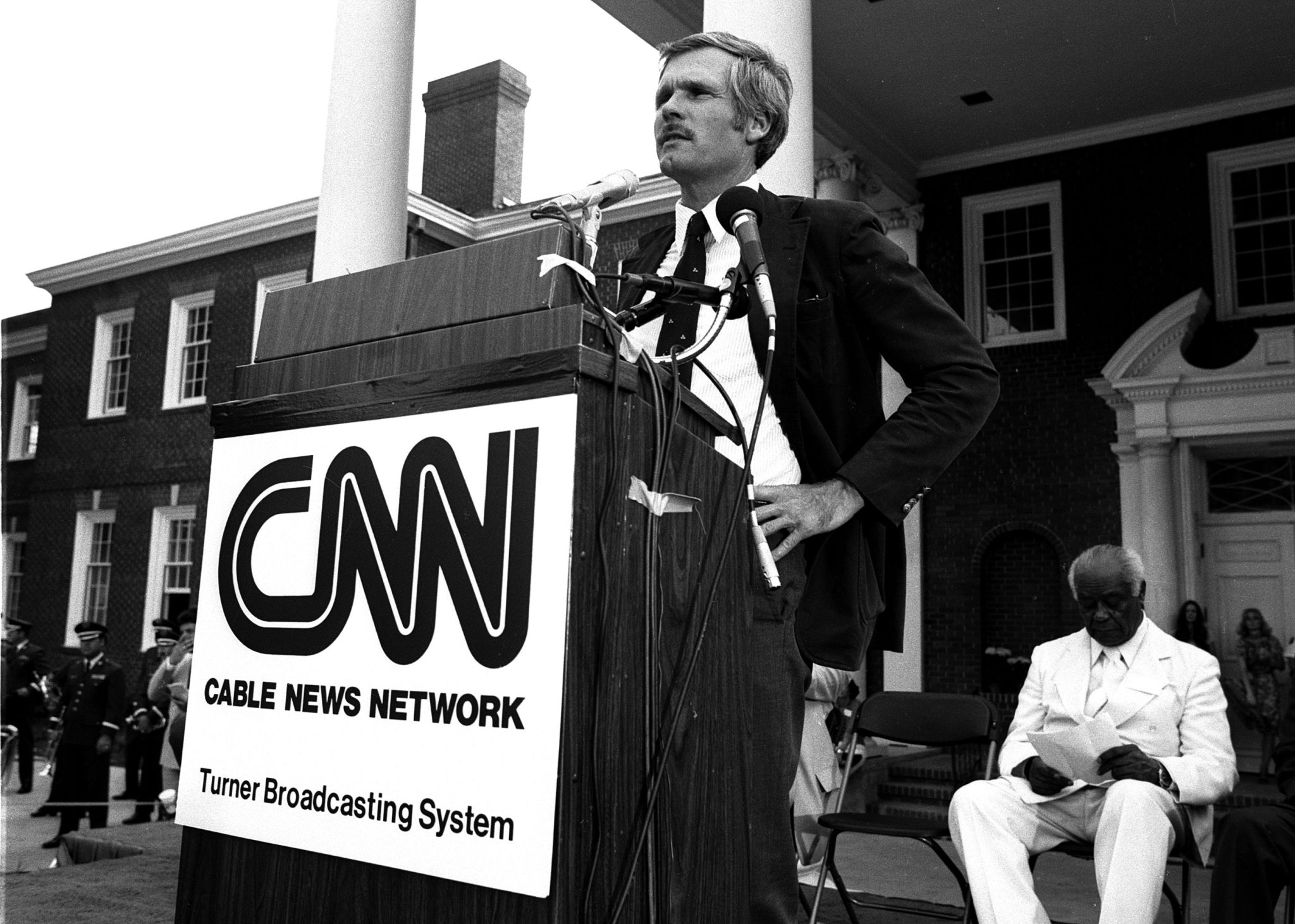
Understanding the legacy of Ted Turner and the creation of the 24-hour news cycle: ‘there is no hyperbole here’
When the Space Shuttle Challenger exploded in 1986, Beth Knobel, a future TV news correspondent, was in graduate school. Emerging from class, she saw TV sets had been set up in the lobby. They were tuned to CNN, the 24/7 news channel that Ted Turner had launched about five years earlier, which was carrying the launch live. “Shuttle launches were just kind of routine and the broadcast networks weren’t even covering them anymore,” says Knobel, who worked for CBS News in the 1990s and now teaches journalism at Fordham University. “CNN did. So when things went so tragically wrong, there they were on top of the story like no one else.” That, says Knobel, who now teaches a class on TV’s biggest innovators, is just one example of why Turner was the biggest of them all — huge steps ahead of anyone else in his understanding of how news needed to be delivered. Turner’s death comes at a fraught time for cable news, which has struggled to retain viewership in an era of countless media choices and abundant streaming video. CNN has not been immune; changes in the media ecosystem, the company’s financial picture and multiple editorial resets over the years have left it a markedly different entity than the one Turner built. But that misses an important point: He built it. “We use the word giant sometimes to describe people that really aren’t giant,” Knobel says. “Ted Turner truly is a giant. He invented around-the-clock news.” Early on, Turner saw news as something global Many in and around the news industry struggled Wednesday for big enough words to describe Turner’s impact on how we consume news. Longtime TV analyst Robert Thompson said the issue was hyperbole-proof. “Death and hyperbole often go together,” said Thompson, director of Syracuse University’s Bleier Center for Television and Popular Culture. ”But there is no hyperbole here. I can think of very few other things in the 20th century that so dramatically changed American politics, journalism and civic engage