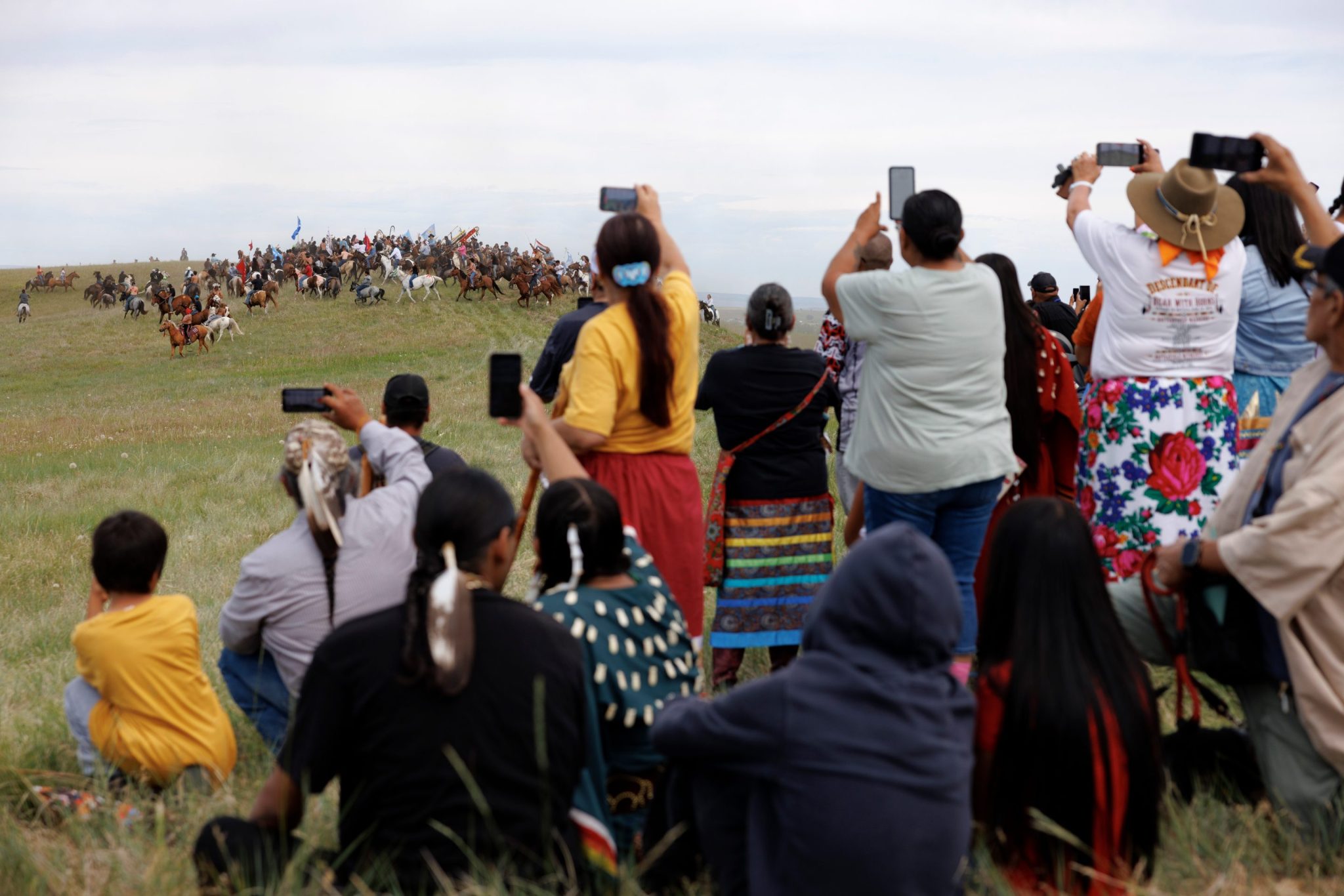
‘Today I am celebrating the victory of our people’: Native Americans ring in the anniversary of the Battle of Little Bighorn
The quiet, wind-swept hills of the Battle of Greasy Grass, known to many as the Battle of Little Bighorn, are the setting for Native Americans commemorating the battle’s 150th anniversary with horse rides, battle reenactments and a camp of hundreds of people this week. The battle, one of the most famous and symbolically charged events in American history, marked its anniversary Thursday. Allied tribes came together on that hot day near the banks of the Little Bighorn River in present-day Montana to hand the U.S. Army a rare defeat as they fought to preserve their way of life in the face of westward expansion. Lt. Col. George Armstrong Custer and more than 200 his troops were killed. Reenactments will illustrate the battle. Horse riders from the Cheyenne River Reservation in South Dakota and elsewhere are traveling hundreds of miles to the Crow Agency area in Montana to mark the occasion. Families are being encouraged to share their oral histories. At the Standing Rock Sioux Reservation in North Dakota, horse races and traditional songs and dances are planned. Gathering at the battlefield area in Montana means “we’re still here,” said William Good Bird, a traditional singer from the Spirit Lake Dakota Nation in North Dakota who woke up the camp where hundreds of people were gathered from numerous tribes with a song and drumming. “Today I am celebrating the victory of our people, celebrating my life as a human being and my spot on this earth,” he said. Native warriors overpowered divided U.S. Army forces The discovery of gold in the Black Hills in what is now South Dakota by a Custer expedition just years earlier spurred a military campaign against Great Plains tribes that aimed to push them onto reservations, or what were known then as agencies, said historian Dakota Goodhouse. There were bigger, longer battles and other Native victories between March 1876 and June 1877, but Goodhouse said only the Battle of Greasy Grass — named by Native Americans for the slic