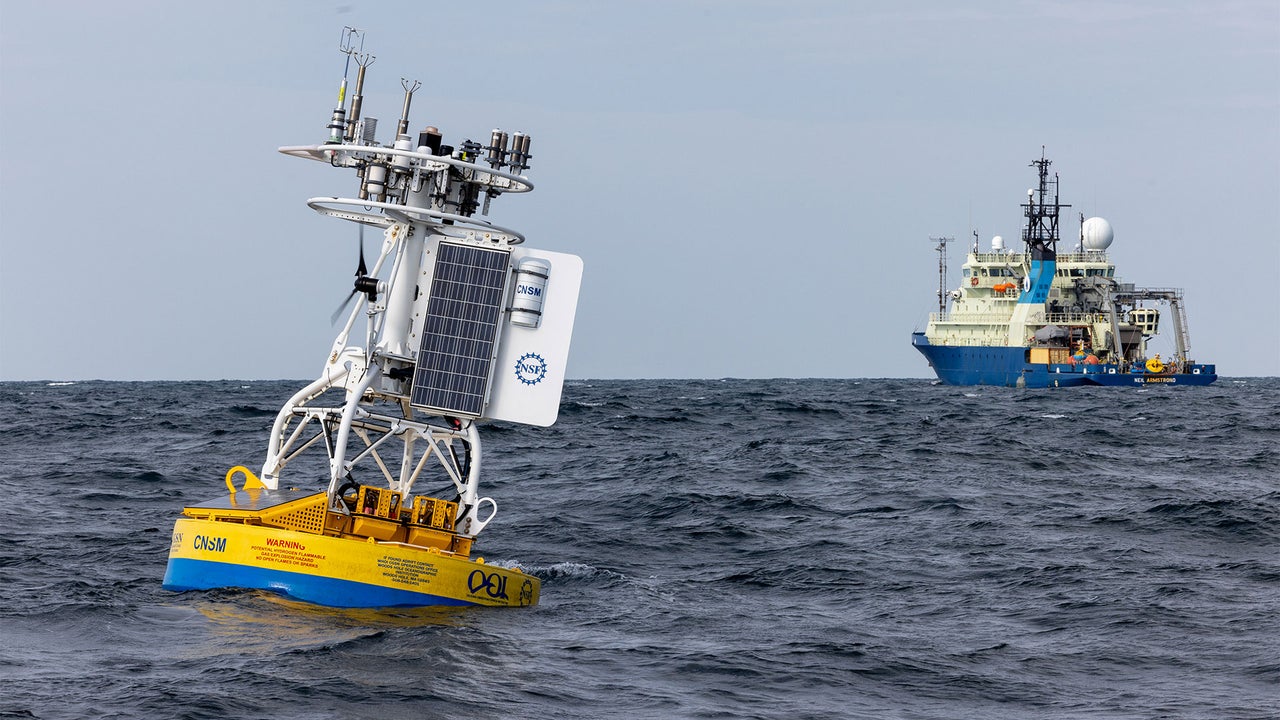
Scientists call it a ‘tragic loss.’ Why the U.S. is shutting down a major ocean monitoring network
The Ocean Observatories Initiative (OOI), a network that provides access to real-time ocean data that is relied on by scientists, researchers, and students, is being restructured with major cuts eliminating most of the project’s ocean monitoring efforts. According to a recent statement from Jim Edson, Principal Investigator, NSF Ocean Observatories Initiative, the Trump administration’s recent slashing of the National Science Foundation (NSF) funds will nearly wipe out most of OOI’s areas of focus. Edson gave a timeline for bringing the network’s initiatives to a close through what he called the NSF’s “descoping plan.” The OOI leader said that in-water infrastructure from three projects will be removed over the next approximately 15 months, with four out of five arrays ending by Summer 2027. That said, he says the “previously collected OOI data will remain accessible through the OOI Data Center.” What does the Ocean Observatories Initiative do? OOI, which was first created in the early 2000s, provides 24/7 ocean-monitoring. The Ocean Observatories Initiative, a $368 million project, uses 900 advanced instruments to constantly monitor the ocean with state-of-the art systems. Through the network, scientists have been able to study marine biodiversity, climate change, and current environmental events. The project has enabled researchers to access data from even the deepest and most hard-to-reach parts of the ocean via a worldwide pen-access format. “Powered by state-of-the-art cyberinfrastructure, data is freely available to scientists, educators, and the public through the OOI Data Portal,” OOI says. Therefore, in addition to the world’s top researchers, anyone with an internet connection, including students, teachers, or those working on their own independent projects, have been able to access cutting-edge, real-time information about the world’s oceans. While the network won’t cease