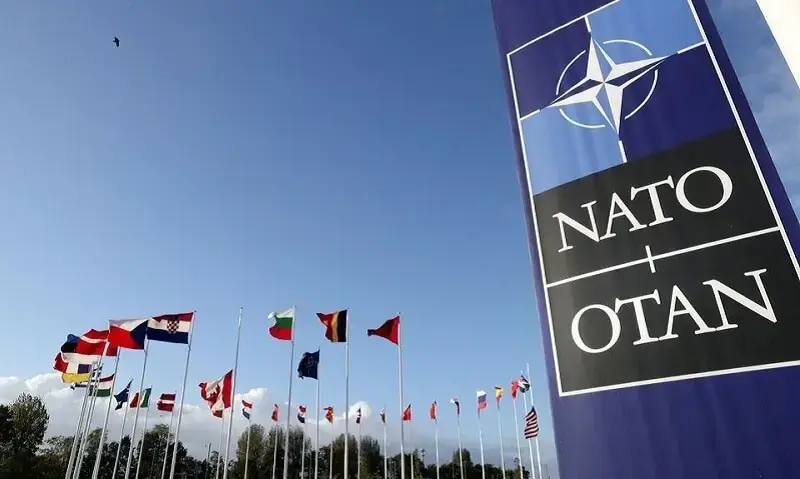
More cash, not enough weapons: Nato presses to produce more
Why this matters: local context for readers following news across Pakistan and the region.
A year on from their historic pledge to ramp up defence spending, leaders of the North Atlantic Treaty Organisation (Nato) gathering in Ankara next week will reckon with another challenge: getting industry to produce enough weapons. As money flows into defence budgets — up $90 billion in Europe and Canada last year alone — the 32-nation alliance is struggling to transform the funds into firepower. “Cash is crucial, but you can’t stop a missile or a tank with a dollar or a euro,” Nato chief Mark Rutte said. “We need to turn the cash into combat-ready capabilities, and fast. This is our shared priority.” In Ankara, the issue will be in the spotlight as leaders are expected to ink deals worth billions of dollars at a special industry forum on the sidelines of the summit. The struggle getting industry to churn out enough weapons fast enough does not come as a surprise. Russia’s invasion of Ukraine has long highlighted Europe’s limitations to produce enough — wait times are long and crucial capabilities are lacking. Meanwhile, President Donald Trump’s war on Iran has sapped US stockpiles and shown the strains for firms to refill them. For Europe, the need to step up is of fundamental importance as it looks to become less reliant on Washington in the face of growing doubts about US reliability and warnings Russia could attack in the coming years. “We’ve learned how to raise additional funds. We still need to learn how to spend them in an effective way in order to outproduce, out-innovate, outgun Russia,” said EU defence commissioner Andrius Kubilius. Industry insists that a change is already underway after several decades of underinvestment across the board in defence. “Many manufacturers are investing in significantly greater production capacity,” Camille Grand, secretary general of the European defence industry association ASD, told AFP. “But does that mean we’re exactly where we should be? Probably not.” ‘Overwhelmed’ Analysts warn that if war broke out now, Europe wou