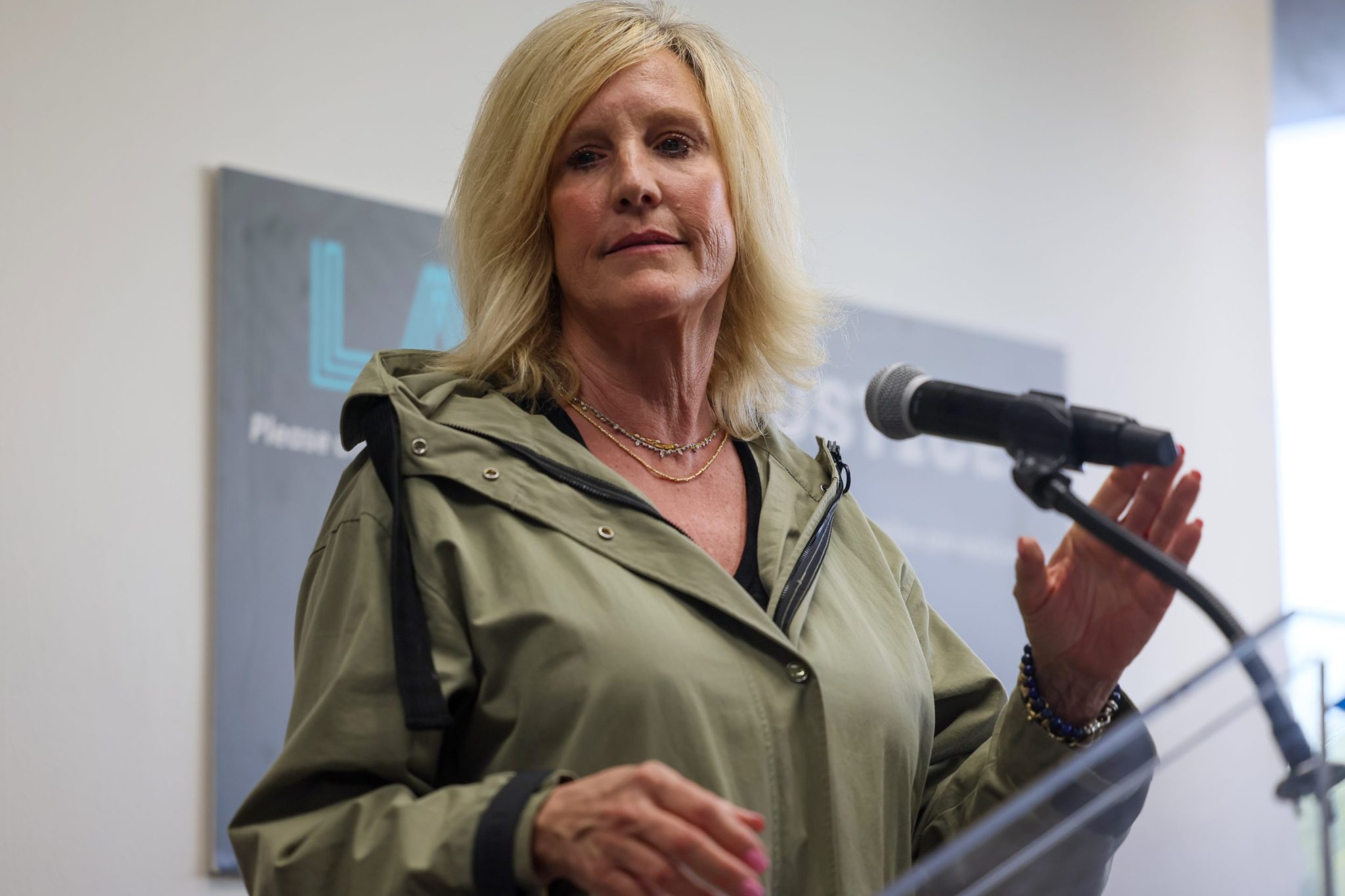
Erin Brockovich, the activist who defeated a utility giant and inspired a Julia Roberts film, is pushing data centers to be more transparent
The environmental activist who won $333 million for hundreds of people affected by utility company PG&E’s groundwater contamination is now turning her focus to data centers. Portrayed by Julia Roberts in a 2000 film that shares her name, Erin Brockovich is most well-known for the millions she secured for residents of Hinkley, Calif., in the largest direct-action lawsuit in history. Following that case, Brockovich has gone on to write several books on environmental issues and has continued to advocate for victims of environmental damage across the country. Her latest project, Brockovich AI Data Center Reporting, is helping tackle one of the fastest-growing environmental concerns today: the proliferation of data centers in the U.S. While Brockovich wrote in a Substack post last week that she is not universally opposed to data centers, she noted that people living near proposed projects are increasingly concerned with the covert tactics and obfuscation that has surrounded efforts to build them. “The single most common concern—more than noise, more than water usage, more than rising utility bills—is the one word that keeps appearing in submission after submission: transparency,” she wrote. Her website, brockovichdatacenter.com, is compiling complaints from across the U.S. to create an interactive map of data center projects that have been proposed, are under construction, or are operational. While the map isn’t exhaustive, she has received nearly 4,000 reports from people about data center developments in their communities in nearly all 50 states. Brockovich pointed to several examples of how companies pushing to build data centers have kept nearby residents in the dark. In Holly Ridge, La., for example, local resident Diane Cobb told New Orleans Public Radio that she and other residents weren’t notified ahead of time about Meta’s planned $27 billion Hyperion data center that is set to take up 4,000 acres nearby. “Nobody told us anything,” she told the outle