US Supreme Court sides with Trump in asylum-processing case
Why this matters: local context for readers following news across Pakistan and the region.
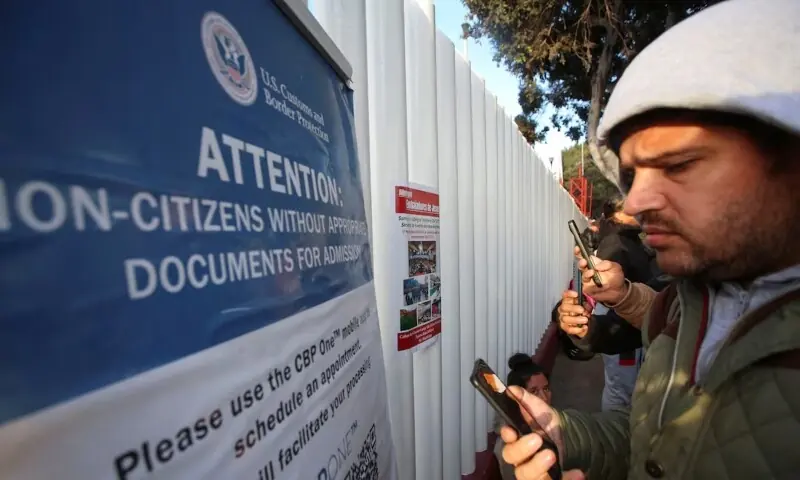
The US Supreme Court handed President Donald Trump a victory on Thursday by backing the federal government’s authority to turn away asylum seekers when officials deem US-Mexico border crossings too overburdened to handle additional claims. The court, in a 6-3 ruling powered by its conservative justices, overturned a lower court’s finding that the policy violated federal law. The Republican president’s administration has said it may seek to revive the policy, known as “metering,” after it was dropped by Trump’s Democratic predecessor, Joe Biden. The ruling was one of two in immigration-related cases issued by the court on Thursday backing Trump. The metering policy allows US immigration officials to stop asylum seekers at the border and indefinitely decline to process their claims. It is separate from a sweeping policy to deny entry to asylum seekers at the border that Trump announced after returning to the presidency last year. That policy also faces an ongoing legal challenge. A demonstrator holds a sign as a small group of clergy gather for a vigil prior to arguments in Noem v Al Otro Lado, a case to determine if noncitizens blocked on the Mexican side of the border by US officials can apply for asylum, at the US Supreme Court building in Washington, DS, the US on March 24, 2026. — Reuters/File Under US law, a migrant who “arrives in the United States” may apply for asylum and must be inspected by a federal immigration official. The legal issue in the current case is whether asylum seekers who are stopped on the Mexican side of the border have arrived in the United States. Conservative Justice Samuel Alito, who authored Thursday’s ruling, wrote that the answer is “no”. “In ordinary speech, no one would say that a person ‘arrives in’ a place — for example, a house, a city or a country — before the person enters that place,” Alito wrote. “The context in which the phrase ‘arrives in the United States’ is used in the immigration statutes at issue here supports an