NASA Science, Cargo Launch on 34th SpaceX Resupply Mission to Station
Why this matters: new research or scientific developments with potential real-world impact.
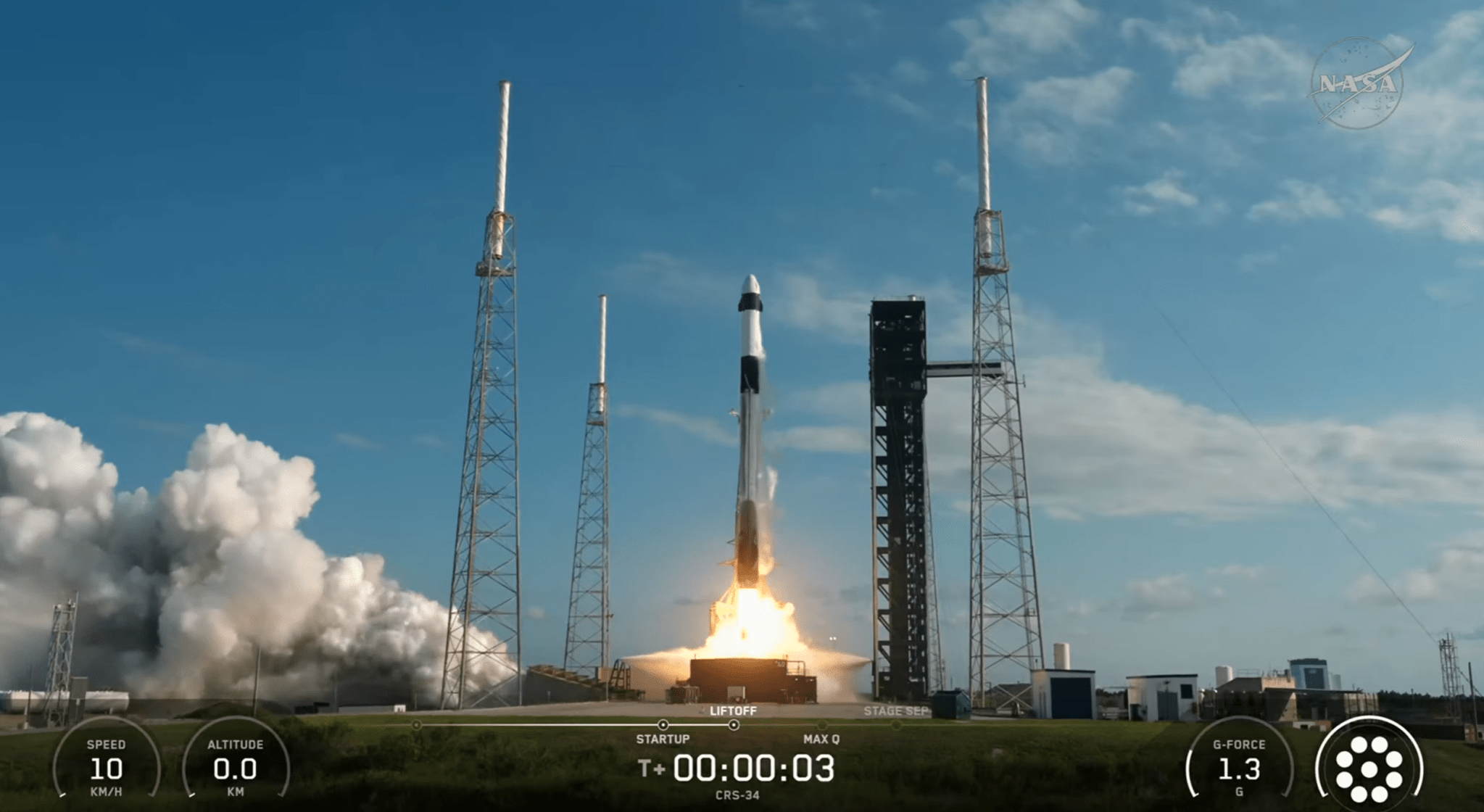
The Space X Falcon 9 rocket, carrying the Dragon cargo spacecraft atop, launched Friday, May 15, 2026, from Space Launch Complex 40 at Cape Canaveral Space Force Station in Florida.Credit: NASA+ The 34th Space X commercial resupply mission under contract with NASA is headed to the International Space Station with new scientific experiments after lifting off at 6:05 p.m. EDT Friday on a Falcon 9 rocket from Space Launch Complex 40 at Cape Canaveral Space Force Station in Florida. The Space X spacecraft, loaded with nearly 6,500 pounds of cargo for the space station’s Expedition 74 crew, is scheduled to autonomously dock at about 7 a.m. Sunday, May 17, to the forward port of the station’s Harmony module. Watch NASA’s live rendezvous and docking coverage beginning at 5:30 a.m. on NASA+, Amazon Prime, and the agency’s YouTube channel. Learn how to watch NASA content through a variety of online platforms, including social media. In addition to cargo for the crew aboard the space station, Dragon will deliver several new experiments, including a project to determine how well Earth-based simulators mimic microgravity conditions, a bone scaffold made from wood that could produce new treatments for fragile bone conditions like osteoporosis, and equipment to help researchers evaluate how red blood cells and the spleen change in space. The Dragon spacecraft also will carry a new instrument to study charged particles around Earth that can impact power grids and satellites, an investigation that could provide a fundamental understanding of how planets form, and an instrument designed to take highly accurate measurements of sunlight reflected by Earth and the Moon. These experiments are just a sample of the hundreds of investigations conducted aboard the orbiting laboratory in the areas of biology and biotechnology, physical sciences, and Earth and space science. For more than 25 years, people have lived and worked continuously aboard the International Space Station, advancing scient