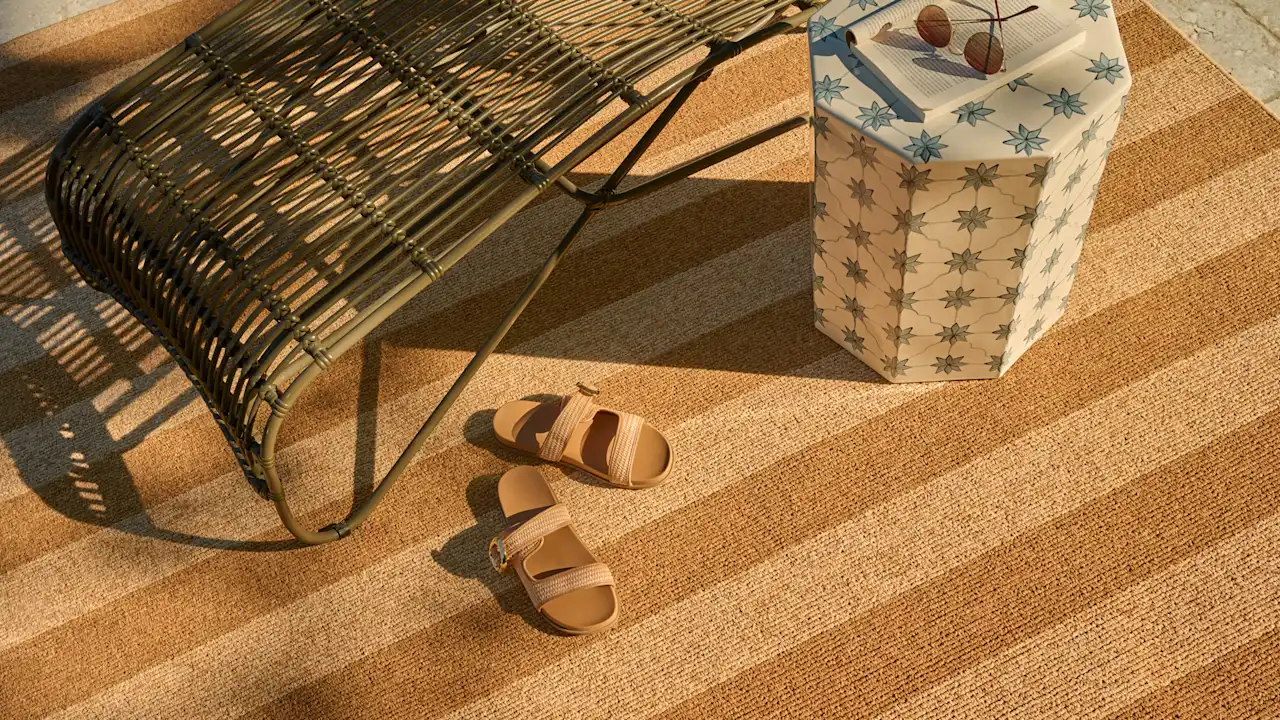
How Ruggable designed its new rug to have the charm of jute without any of the scratchiness
I have a very conflicted relationship with my jute rug. I love the organic, textured aesthetic that makes my dining room feel earthy and relaxed. But over time, I’ve come to resent how scratchy it feels underfoot, how the fibers shed and splinter, and how if my toddler spills yogurt on it, there’s no way to get it out of the nooks and crannies, so it becomes part of the rug forever. Ruggable, the company that launched nearly a decade ago on the premise that rugs should be washable, has been on a mission to reimagine the jute rug. And after nearly two years of development, it is launching a machine-washable rug called Performance Weave that mimics jute so convincingly, you would need to touch it to know the difference. To create it, Ruggable had to embark in a complex process of reverse engineering to give customers all the qualities they love about jute—the complexity of its texture and color—while making it softer to the touch and washable. “There’s so many performance benefits of jute when you think about it as a material, but there are a lot of drawbacks too,” says Nicole Otto, Ruggable’s CEO. “Traditional jute doesn’t have the best foot feel. We set out to fix that.”[Photo: Ruggable]Building a Jute-AlternativeThe breakthrough starts at the yarn level. Rather than using standard synthetic fibers that are commonly used to make rugs these days, Ruggable’s team engineered a yarn made from a polymer called polypropylene specifically designed to replicate jute’s signature look.To re-create the depth and tonal variation you would see in a natural fiber, they found a way to twist three distinct filaments together that were light, medium, and dark. It’s the same principle behind why our hair looks dimensional, rather than flat: Individual hairs come in different shades that work together to create richness. This makes it different from rugs that are dyed in a single color, which ends up looking flat