Can this Silicon Valley startup make autonomous fleets profitable?
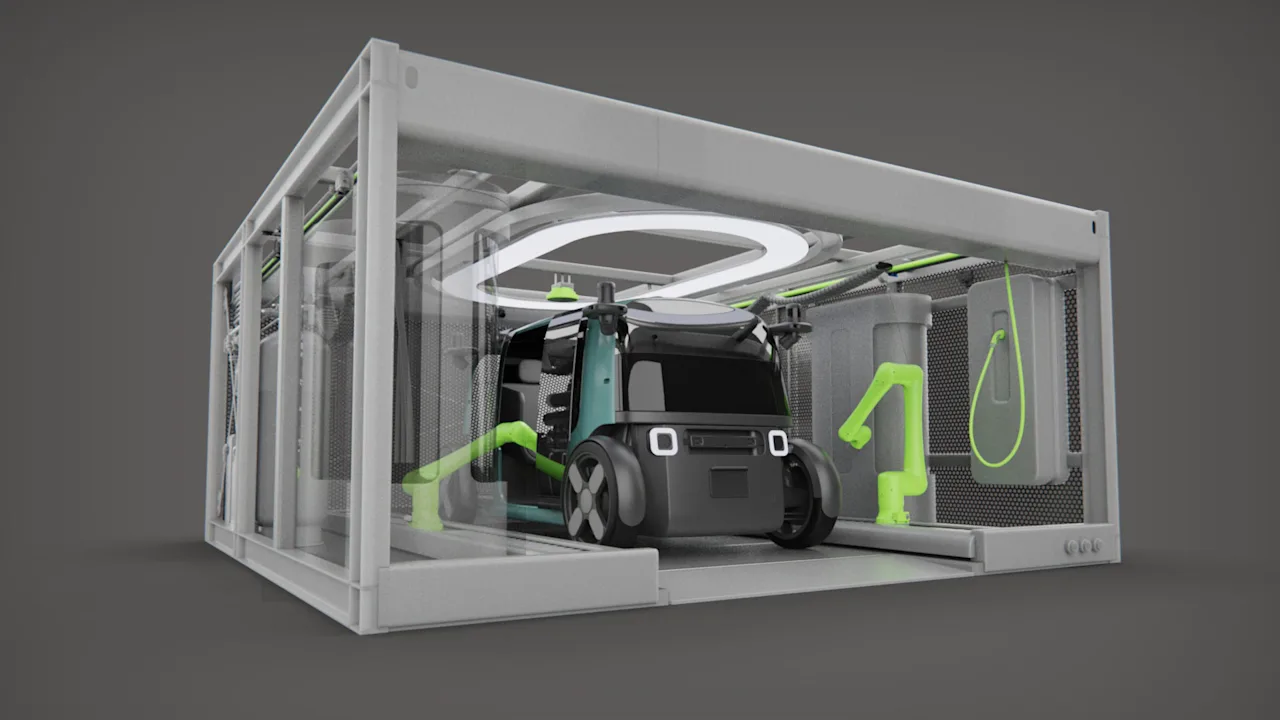
While most folks embrace the futuristic vibe of autonomous cars, two veteran mobility entrepreneurs quickly spotted a looming chokepoint in their scaling efforts. The robotaxi industry desperately needs a faster, more streamlined way to service its fleets if it hopes to become profitable.George Kalligeros, a Greek car enthusiast and former Tesla engineer, and the British business strategist Dan Keene were all too aware of new mobility infrastructure. They’d navigated similar logistics with their London startup Pushme Bikes, a massive battery-swapping network for shared e-scooters & e-bikes that raised $600 million before selling to Germany’s Tier Mobility in 2020. (The global platform now serves 5,000 locations across 40 cities.)Now they’re applying that experience to autonomous driving. When they noticed robotaxi expansion goals outpacing its earning ability, Kalligeros and Keene set about reimagining an operations structure that wouldn’t consume the majority of fleet costs. Their solution—a connected network of automated, localized service pods—is the basis for Aseon Labs, a Redwood City, CA startup backed by Y Combinator and publicly unveiled today.“I’ve been following self-driving cars for many years, and I’m a huge believer that it can bring about transformational welfare as long as the economics are right,” Kalligeros tells Fast Company. “Self-driving cars don’t make [economic] sense today. They’re burning through $2 billion or $3 billion a year, so what we have today is not fit for scale.”Logistical logjamLed by Waymo, autonomous driving is already live in San Francisco, Phoenix, Los Angeles, Austin, Atlanta, and Miami, with expansion plans for another 20 cities. By 2035, Goldman Sachs predicts a $48 billion domestic market as robotaxi numbers grow from the current 3,000 to 3 million, and a $415 billion global market expanding from 7,000 to 6 million vehicles.George Kalligeros [Photo: Aseon Labs]That expansion, however, is threatened by operating costs.