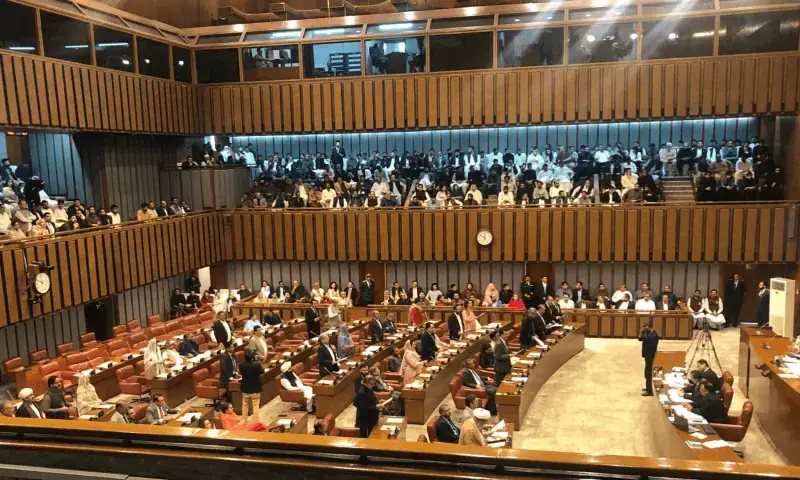
FY2026-27 budget: Senate seeks increase of income tax exemption threshold, reduction in electricity tariffs
Why this matters: local context for readers following news across Pakistan and the region.
ISLAMABAD: The Senate on Thursday adopted several recommendations regarding the federal budget for FY2026-27, seeking an increase in the income tax exemption threshold for low-income earners, a reduction in electricity bills and increased taxes on luxury assets. A motion for this purpose was moved by Senate Standing Committee on Finance and Revenue Chairperson Saleem Mandviwalla. The standing committee finalised the recommendations earlier in the day. The report was then laid before the Senate for adoption and would now be transmitted to the National Assembly (NA), as per the Constitution. The NA will take up the recommendations before the final vote on the budget. However, these recommendations are not binding. The Senate’s recommendations include: Increase in the income tax exemption threshold for low-income earners Reduction in tax rates for salaried individuals affected by inflation Expansion of targeted social protection programmes for vulnerable households Reduction in general sales tax on essential food items, medicines, educational material and agricultural inputs Avoidance of imposition of new taxes on basic necessities that disproportionately affect lower-income groups Allocation of funds for reduction in electricity tariffs Introduction of a transparent roadmap for reducing capacity payments and circular debt Provision of targeted subsidies for low-consumption domestic consumers Reduction in taxes and duties on fertilisers, seeds, pesticides and agricultural machinery Increase in allocations for water conservation and agricultural research Increase in federal allocations for public hospitals and primary healthcare Enhanced funding for higher education, scholarships and vocational training programmes Publication of all tax exemptions and concessions granted to spectific sectors or entities Set a requirement for periodic reporting to Parliament on public debt, circular debt and major public sector expenditures Reduction in non-development expenditure where