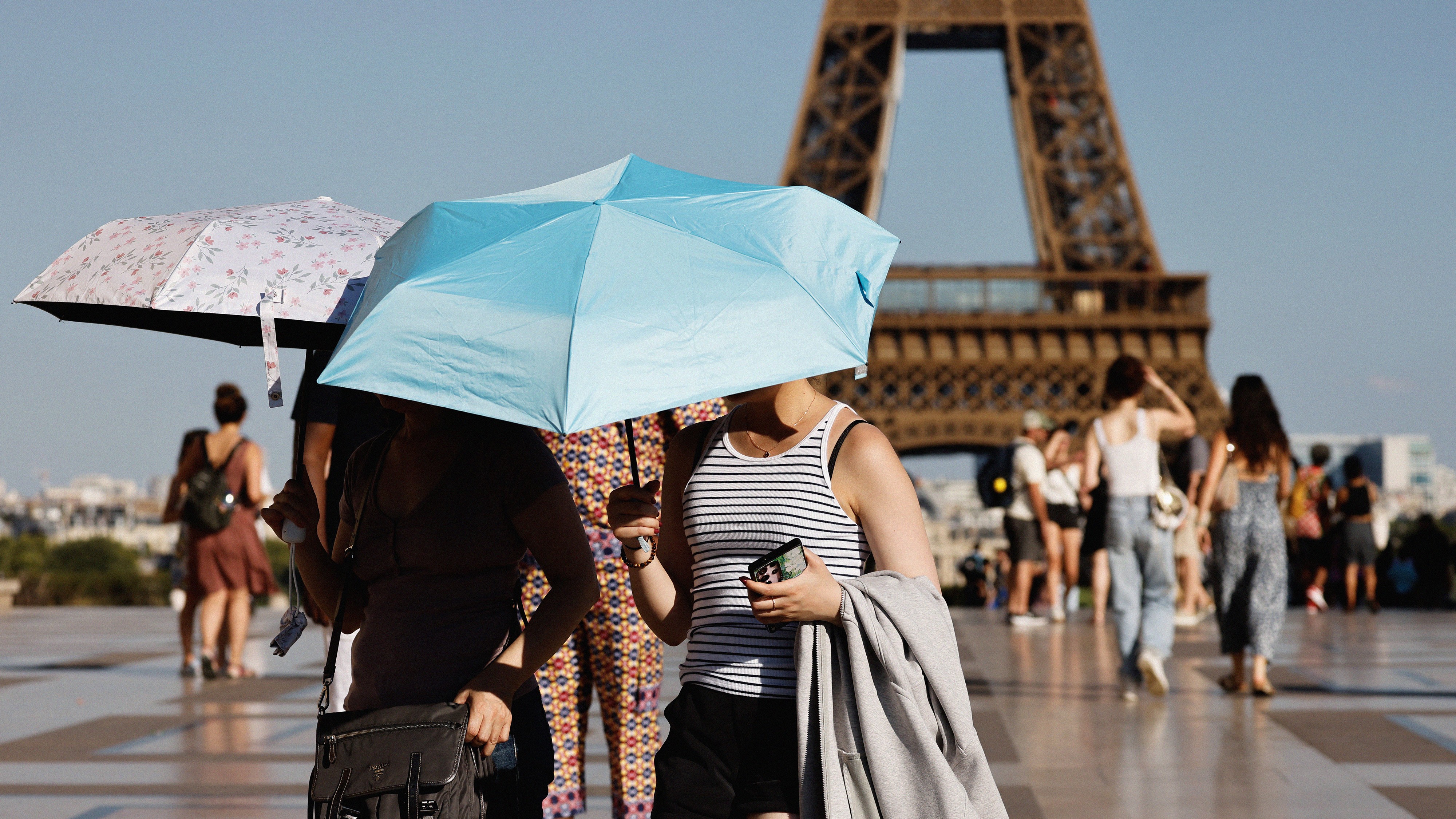
France’s Air Conditioning Failure
On a recent morning partway through France’s historic heat wave, Dhafer Kahri, an air-conditioning technician, let me join him on a house call to an apartment in Paris’s 16th arrondissement, where he was trying to bring a unit back to life. Kahri’s phone rang so often—several times an hour, all day long—that he worked with his Air Pods in. With more work than he could handle, he could freely apologize with the magic words. The boss won’t do it for rejecting jobs that he, the boss, didn’t want to do. He wanted to work on apartments with balconies, such as this one, because a balcony is in many cases the only spot an air conditioner can be installed here—hidden from neighbors, preservationists, and the city. He did not want to work on the city’s famous gray zinc roofs, which can reach temperatures of 150 degrees on the hottest summer days, creating life-threatening heat for those who live beneath them.The position of the French government, and the city of Paris, is that air-conditioning is a “maladaptation” to climate change—a wasteful, antisocial technology that intensifies the very crisis that it purports to address.But the national consensus underlying that position is beginning to melt as record-breaking heat tests France’s patience and principles. On Tuesday, the country recorded the hottest day in its history. Then again on Wednesday. Thursday was the same. The high temperature in Paris has been more than 96 degrees for 10 straight days, topping out at 105 this week.[Beth Gardiner: Europe’s come-to-AC moment]France has been slow to recognize that many buildings need stronger medicine than shutters, ceiling fans, and a good night breeze—and they need it now. This has left the country exposed on multiple fronts. The far right has capitalized on the present social breakdown—closed schools, canceled trains, overloaded hospitals—to proclaim itself the party of air-conditioning, turning a complicated technical question into a culture-war cudgel. Meanwhile, in the absenc