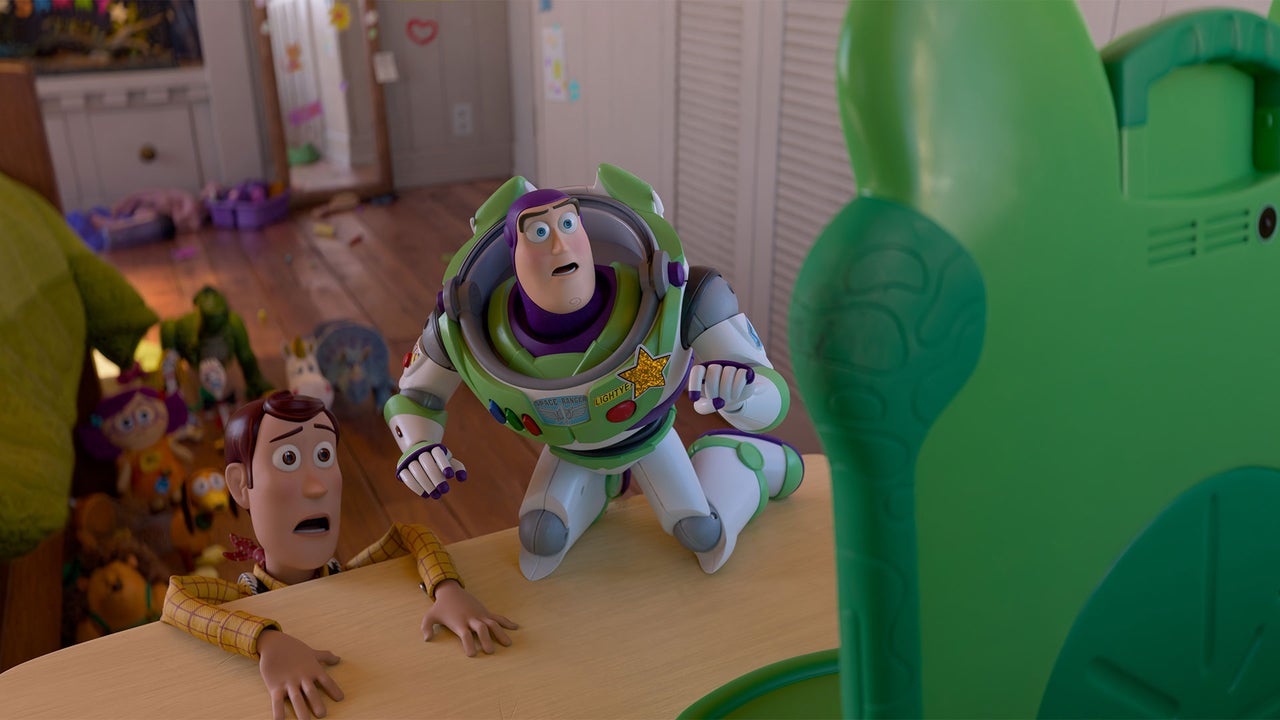
‘Toy Story 5’ taps into white-collar fears of obsolescence in the age of AI
Before Disneyfication, fairy tales were terrifying, designed to teach kids about dangerous aspects of the world. Pixar may be taking a page out of the Brothers Grimm’s book. From the beginning, its Toy Story franchise has been about fear of replacement, with the original 1995 movie centered around the friction between cowboy toy Woody and newly arrived space-ranger toy Buzz Lightyear. That the movie itself was a leap forward for digital animation mirrored the on-screen story. Toy Story 5, which hits movie theaters today, also has the potential to warn against the dangers of technology. Here’s what we know so far—with a little history and data thrown in for good measure. What is ‘Toy Story 5’ about? Toy Story introduced the world to Andy’s favorite play things: Woody, Buzz Lightyear, and the whole gang of toys. In the first film, Woody worries he will be replaced by the newer, shinier space ranger, which is a fear many modern workers can relate to. Toy Story 5 appears to take this fear of replacement one step further, adding in an even more tech-heavy element. Jessie, Buzz, and the rest of the toys fear being replaced by a tablet called Lilypad. They call in their old pal Woody to help save the day. What do ‘Toy Story 5’ and AI have in common? Workers, especially office workers who do their jobs on a computer, can likely relate to the recurring theme of perceived obsolescence in the Toy Story films. These days, artificial intelligence threatens to replace employees with technology in almost every field. The Iceberg Index, an MIT labor simulator, found that 11.7% of the U.S. labor market has measured skill-centered overlap with AI. To further put that in perspective, that’s $1.2 trillion in potential lost wages. [Image: Disney/Pixar] While the Iceberg Index is speculative, real-world calculations by Goldman Sachs economist Elsie Peng found that AI has “reduced monthly payroll growth by roughly 16,000 jobs” in the United