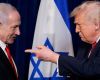
Trump says he will urge Netanyahu not to retaliate after Iran's missile attack on Israel
Key takeaways
- It was Iran's first direct attack since the ceasefire reached on April 8.
- I am going to call Bibi right now and tell him not to retaliate.
- The Iranian attack was retaliation for an Israeli strike on the southern suburbs of Beirut, a Hezbollah stronghold.
Why this matters: an international story with cross-border implications worth tracking.
US President Donald Trump said he would call Israeli Prime Minister Benjamin Netanyahu to ask him not to respond to the missiles Iran fired at Israel on Sunday, in an effort to prevent a new escalation and salvage a deal with Tehran that he considers very close. It was Iran's first direct attack since the ceasefire reached on April 8.
I am going to call Bibi right now and tell him not to retaliate. Each of them had their moment: Israel had its strike, and Iran had its strike. We don't need another one, Trump told the outlet Axios. The president insisted he was close to sealing a pact with Iran: We are very close to a final deal. I don't want it to blow up over what's happening now. According to Axios, Trump's demand that Israel not respond is unusual, since without Washington's backing an Israeli offensive against Iran would be more difficult and risky.
The Iranian attack was retaliation for an Israeli strike on the southern suburbs of Beirut, a Hezbollah stronghold. The Israeli military said it had intercepted all the missiles, which set off air-raid sirens at 10 p.m. local time (7 p.m. GMT). No casualties were reported.