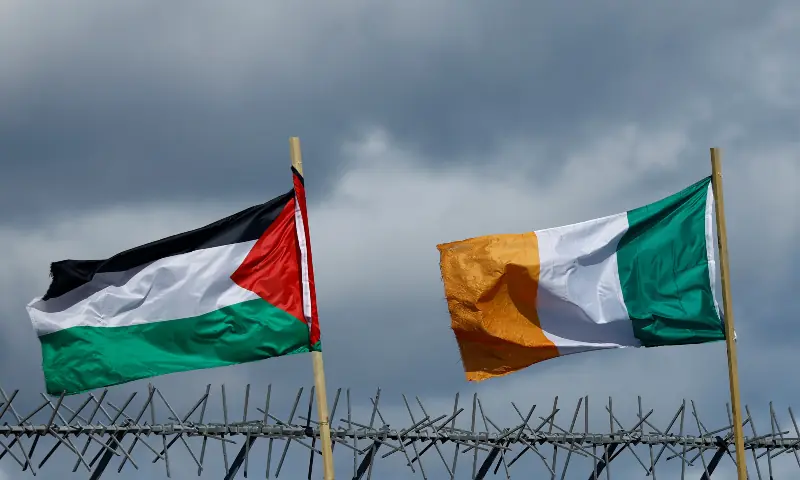
Ireland to ban goods from Israeli settlements in West Bank by July
Why this matters: local context for readers following news across Pakistan and the region.
Ireland aims to pass a law curbing goods trade with settlements in the Israeli-occupied West Bank by mid-July, with Israel, some US lawmakers and business groups opposing the move, Foreign Minister Helen Mc Entee said on Tuesday. Ireland’s government, one of the most outspoken critics of Israel’s war on Gaza, first promised to sanction Israeli settlements in October 2024. The legislation has since been held up by pressure from opposition politicians who aimed to extend the ban also to the services trade, on one side, and international company lobbyists seeking to scrap the bill, on the other. Sources told Reuters last October that the bill was set to be limited to goods. Prime Minister Micheal Martin confirmed that last week and said widening the scope to services was neither “implementable” nor “viable”. Limiting the bill to goods only will impact just a handful of products imported from Israeli-occupied territories, such as fruit that are worth just €200,000 ($234,660) a year, Ireland’s Central Statistics Office said. Business groups warned that the wider category of services could pull foreign multinational companies into unworkable sanctions. “We have consistently advocated for a peaceful solution… but it’s very clear from the actions taken most recently by the Israeli government, but in particular the continued increase in settler violence, the escalation in settler violence in the West Bank, the continued violence in Lebanon, that they have no desire to take this particular road,” McEntee told reporters. Israel’s far-right governing coalition has enabled a rapid expansion of settlements, with some ministers openly advocating for the annexation of the West Bank. Settler violence against Palestinians in the Israeli-occupied West Bank has surged since the Gaza war began in October 2023. McEntee said last week she hoped to pass the law in tandem with Belgium, the Netherlands and possibly Slovenia, which have also committed to introducing bans. Spain has already int