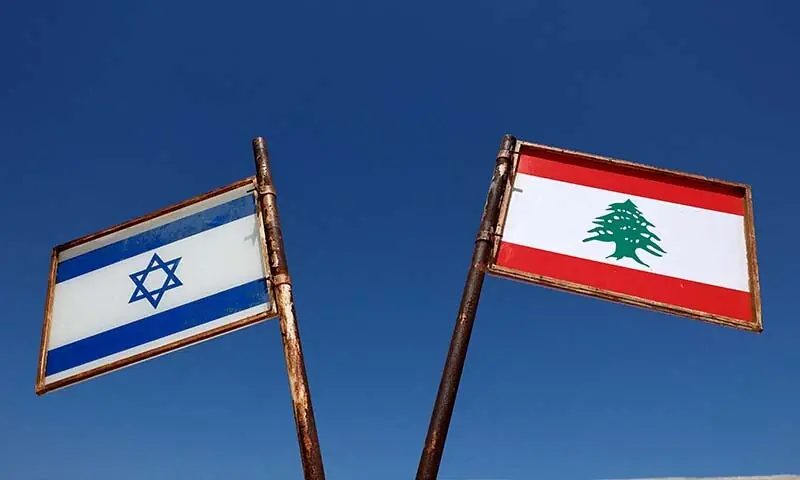
Israel-Lebanon deal may entrench stalemate rather than end war, analysts say
Why this matters: local context for readers following news across Pakistan and the region.
A security deal between Israel and Lebanon risks entrenching a stalemate rather than resolving Tel Aviv’s underlying conflict with Hezbollah by tying its pullout from southern Lebanon to the group’s disarmament, a condition regional analysts and politicians say is unattainable. At its core is a bargain few see as workable: Hezbollah has flatly rejected disarmament, and no Lebanese government has the power to enforce it. With Hezbollah unlikely to disarm, analysts say Israel has political cover to keep an open-ended military presence in southern Lebanon, which it invaded after Hezbollah fired at Israel on March 2 in solidarity with Tehran over the war in Iran. The deal leaves the Lebanese state trapped between obligations it cannot meet and sovereignty it cannot fully reclaim, the analysts say. An Israeli soldier works on a tank on the Israeli side of the Israel-Lebanon border, after Israel and Lebanon signed a framework agreement following US-mediated talks, in northern Israel on June 28, 2026. — Reuters The framework deal also collides with Lebanon’s political realities, asking a fragile sectarian state to confront the most powerful armed faction in the country despite a post-civil war system built on power-sharing rather than coercion. “This is not an agreement, it is an imposed settlement,” said a senior Lebanese politician who declined to be named. The Lebanese army, he added, was neither structured nor equipped to disarm Hezbollah, and expecting it to do so ignored both the group’s entrenched military capacity and the fragile sectarian balance on which Lebanon’s stability rests. ‘Burden’ placed on Lebanon Political analysts say the imbalance is built into the agreement’s design, with sweeping obligations placed on Lebanon but no reciprocal guarantee of Israeli withdrawal. “This agreement has put all the burden on Lebanon,” said Michael Young, a Beirut-based analyst, adding that it “creates a structure that allows the Israelis to remain [in southern Lebanon] ind