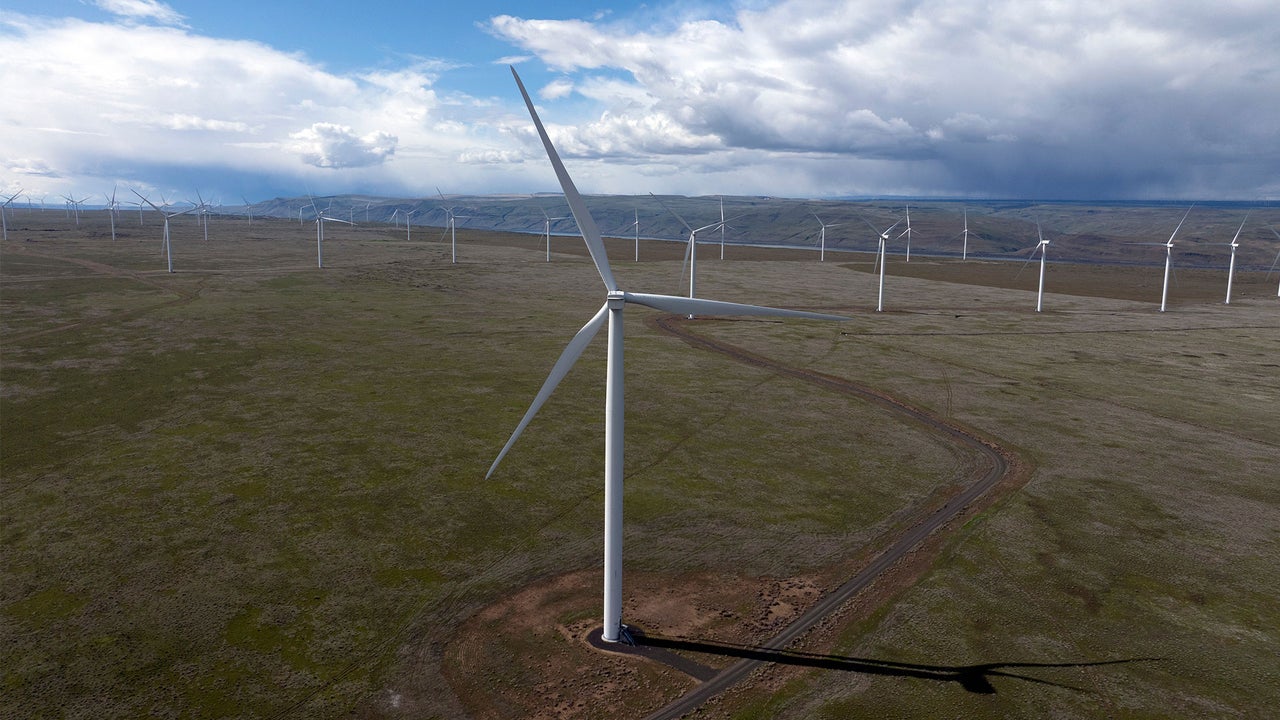
The Pentagon and Pete Hegseth are facing a lawsuit from 9 renewable energy groups. Here’s why
Renewable energy groups are suing the U.S. military because they say national security reviews for new wind farms on private land have been effectively frozen for months. The groups say this logjam jeopardizes $47 billion in investments and thousands of jobs in 21 states.President Donald Trump has frequently talked about his hatred of wind power and calls turbines ugly. Currently, about 10% of the electricity generated in the United States comes from wind farms, making it the nation’s largest source of renewable energy. Solar is the fastest-growing.The lawsuit against the Pentagon and Defense Secretary Pete Hegseth was filed in U.S. District Court in Oregon by nine groups, including Renewable Northwest and the Advanced Power Alliance. They allege that a policy of inaction “poses an existential threat to the wind energy industry across the nation by effectively halting all new development activity.”The Pentagon says it has to balance new sources of energy against military needs. A military office known as the siting clearinghouse, which checks energy projects for national security risks, is actively evaluating these projects — but it’s a complex process where different agencies have to work together, the Pentagon says. The Pentagon evaluates land-based wind energy projects during the Federal Aviation Administration review.Late Thursday, the plaintiffs filed a motion asking the court to order the Pentagon to resume its ordinary review process for new wind energy projects. They included an economic analysis by global consulting firm Charles River Associates Inc.When asked about the economic benefits at risk on Thursday, the department said it does not comment on open litigation.Trump ordered a temporary halt to leasing and permitting for wind energy projects. However, a federal judge struck down that order blocking wind development. Trump is particularly hostile toward offshore wind, and the administration recently started buying back leases to