Going cashless at the mandi
Why this matters: local context for readers following news across Pakistan and the region.
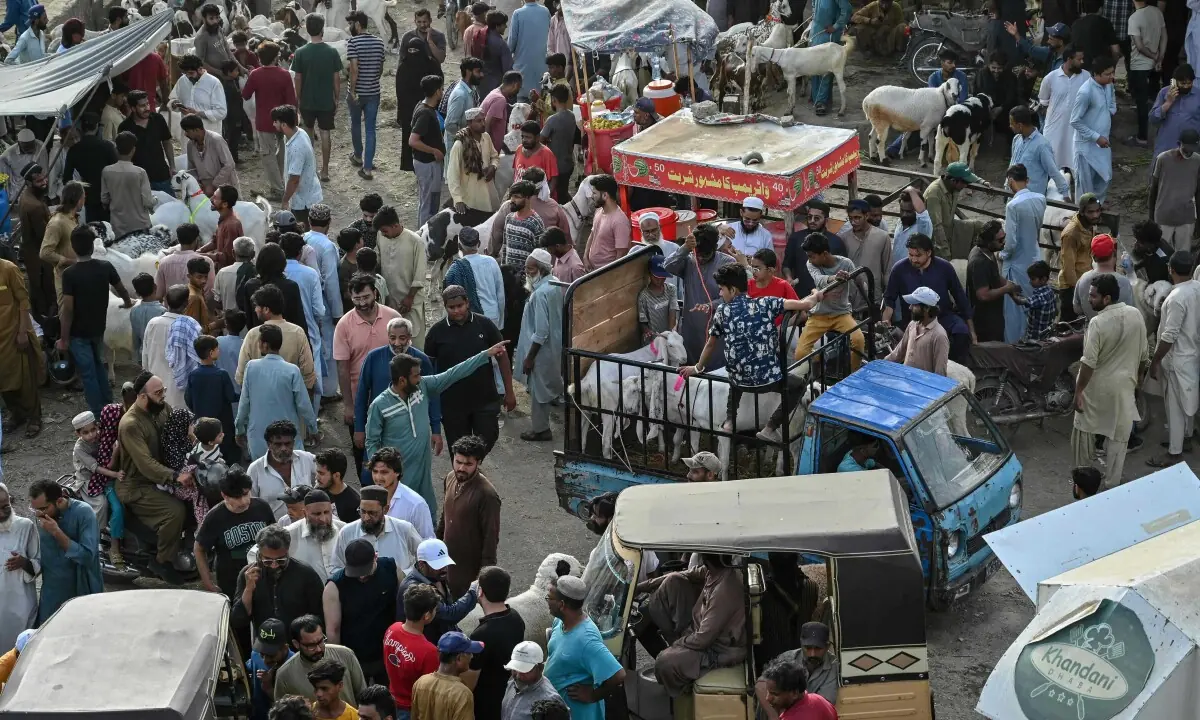
Pakistan’s obsession with everything Bakra Eid is hard to overstate. Whether it’s young boys heading to the mandi every other night to size up animals, uncles asking the price outside your house, or families having barbecues for the entire week — the festival generates a level of commercial and cultural energy that few other events in the country can match. And all of that energy translates into an enormous amount of money changing hands; almost entirely cash. More than seven million animals were sacrificed nationally in 2025, according to the Pakistan Tanneries Association, with total estimated sales of roughly Rs600 billion. Few other segments of the economy concentrate this much money in so few places over such a short period. The activity clusters around a small number of large mandis, often at city outskirts, where buyers and sellers carry large sums across distances with real risks of theft and counterfeit notes. It is precisely the kind of environment where digital payments should, in theory, take off. No wonder the State Bank has been trying to do exactly that since 2024, through its “Go Cashless in Cattle Markets” campaign, which has now entered its third year. In 2024, the campaign facilitated around 13,000 digital transactions worth Rs560 million across its initial set of markets. Last year, the coverage expanded to 54 markets with 24 participating banks, and the numbers jumped to 64,553 transactions valued at Rs4.65bn ie roughly an eightfold increase in throughput and a fivefold rise in volume. Similarly, the average ticket size climbed from approximately Rs43,000 to Rs72,000. While the growth is promising, the base is still too small. Going by the estimates above, not even one per cent of the mandi economy is routing via digital payments. For context, almost 65pc of the banking transactions are going through an online channel. So why has the uptake remained low? In 2025, the campaign’s coverage increased fivefold in volume over 2024; this year nearly do