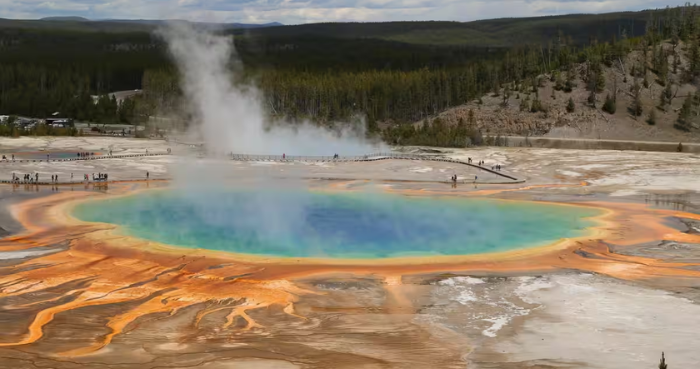
Yellowstone National Park extreme environments provide clues in search for alien life
Key takeaways
- Add ARY News on Google AAResize Arizona State University doctoral candidates Tanner Barnes and Vince Debes are exploring Yellowstone National Park’s hiking trails with a purpose beyond recreation.
- Instead of visiting as typical tourists, they approach the volcanic landscape as practicing astrobiologists, using the park as a natural laboratory to seek insights into whether life exists elsewhere in the universe.
- Their fieldwork aims to understand how microbial life develops and persists under extreme environmental conditions.
Why this matters: local context for readers following news across Pakistan and the region.
Add ARY News on Google AAResize Arizona State University doctoral candidates Tanner Barnes and Vince Debes are exploring Yellowstone National Park’s hiking trails with a purpose beyond recreation.
Instead of visiting as typical tourists, they approach the volcanic landscape as practicing astrobiologists, using the park as a natural laboratory to seek insights into whether life exists elsewhere in the universe.
Their fieldwork aims to understand how microbial life develops and persists under extreme environmental conditions. By studying Yellowstone, with its intense geothermal activity that creates harsh yet biologically active environments, they hope to identify chemical and geological processes that could occur on other planets.