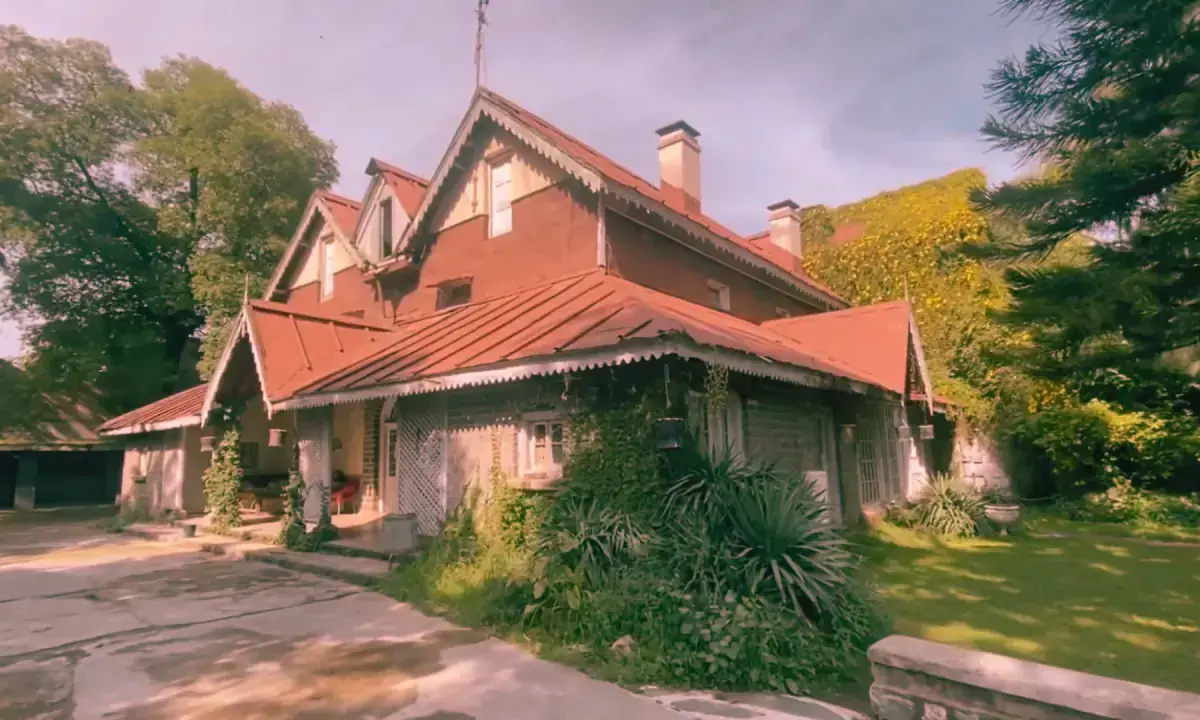
A resting place for a rebel prince in Abbottabad
Why this matters: local context for readers following news across Pakistan and the region.
Abbottabad’s streets mostly dissolve into a mundane blur but Circular Road has a way of catching you by the sleeve. This stretch of town is as silent as silence allows, lined with government offices leaning into one another, until a weathered gate interrupts the monotony. Behind its rusting iron, sits a house that doesn’t belong to the modern world. It is only when you begin to press the locals for answers that its name is spoken: Shahzada House. It is a name that carries an old-world grandeur the hushed street can barely support, with its roots stretched across borders and centuries back to Bukhara. A prince’s journey The story of Shahzada House is one of a man in open rebellion. Mir Syed Abdul Malik Tura may now be a footnote in history, but he was once the North Star of Bukhara, an heir to a lineage entrenched in power and learning, one that traces its foundations to the Timurid Era, a golden age of culture and science in Central Asia and Persia. His story is Bukhara’s. Records prove that the city was shaped over the course of many centuries and was heavily inspired by Persianate culture and Islamic scholarship before it emerged as a political centre. After Qutayba ibn Muslim conquered it in the 8th century, it flourished as a capital under the Samanids and was famed for its intellectual and architectural brilliance. In a later phase, Bukhara became the seat of the Emirate of Bukhara, a political entity that materialised by the late 18th century and continued through the 19th under successive rulers. While the emirate retained internal authority, it faced the pressure of Russian expansion intensifying across Central Asia. Bukhara attempted to resist Russian encroachment under Emir Nasrullah Khan. But when his successor, Emir Muzaffar bin Nasrullah, came to power, the geopolitical reality had pivoted. Russian advances had tightened their grip on Central Asia, leaving almost no room for defiance. In 1867, Muzaffar entered into a peace agreement with Russians. The s