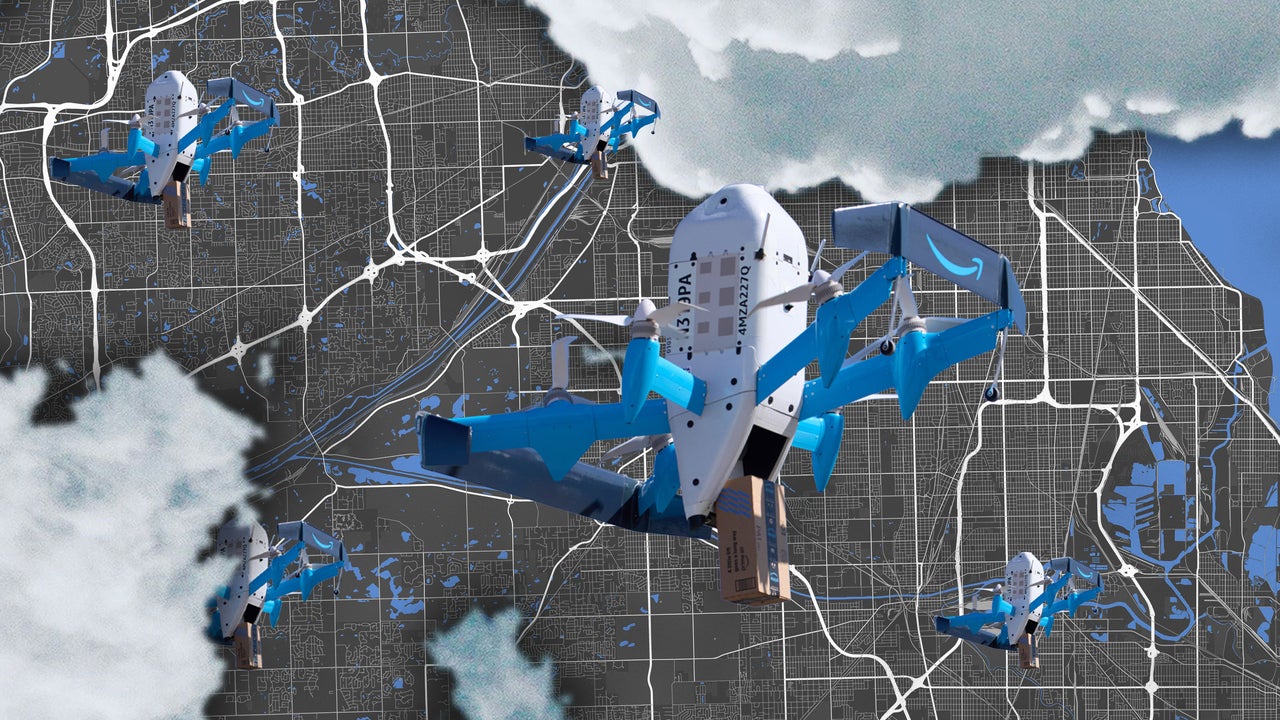
Amazon’s drone ambitions are about to reshape Chicago’s south suburbs
The next frontier in drone delivery? The airspace above your community. Amazon’s CEO, Andy Jassy, said recently that the company intends to continue developing its Prime Air drone delivery program, with the goal of expanding drone delivery to 500 million packages a year worldwide over the next decade. To achieve this, Amazon has started operating Prime Air drone delivery and conducting pilot tests in eight U.S. cities, with four more to be added soon. One of these cities is Chicago, whose south suburbs are next on the list for a trial expected later this spring or early summer. For people who live within an eight-mile radius of Amazon’s Matteson and Markham warehouse locations near Chicago, their neighborhoods will be part of the next Amazon Prime Air drone trial. Participants will be able to order small packages through Amazon Prime to be delivered via drones. Those who choose not to participate will still need to prepare themselves for delivery drones flying above their sidewalks, streets, and homes—and what that may entail. Amazon’s MK30 delivery drones are approved by the Federal Aviation Administration, and have six sets of propulsors. Each weighs 80 to 85 pounds, operates autonomously using onboard AI systems, and can carry a 5-pound payload. A 2025 FAA document describes the drones as using rechargeable lithium-ion batteries and being able to fly up to 400 feet above ground level at a maximum cruise speed of 73 mph. There may be some initial thrill in seeing delivery drones zipping through neighborhood skies. But, as prior accidents suggest, that thrill may quickly give way to alarm should these drones lose power, collide with birds, structures, or each other, and randomly plummet down. The momentum of a loaded 85-pound drone, or even a 5-pound payload dropping from a drone at 400 feet while traveling 73 mph, generates a great deal of force. In a dense community, this is a risk. To be fair, the accidents that have been documented seem to have mostly aff