NASA’s TESS Mission Reveals the “Puffiest” Planets Ever Found
Why this matters: new research or scientific developments with potential real-world impact.
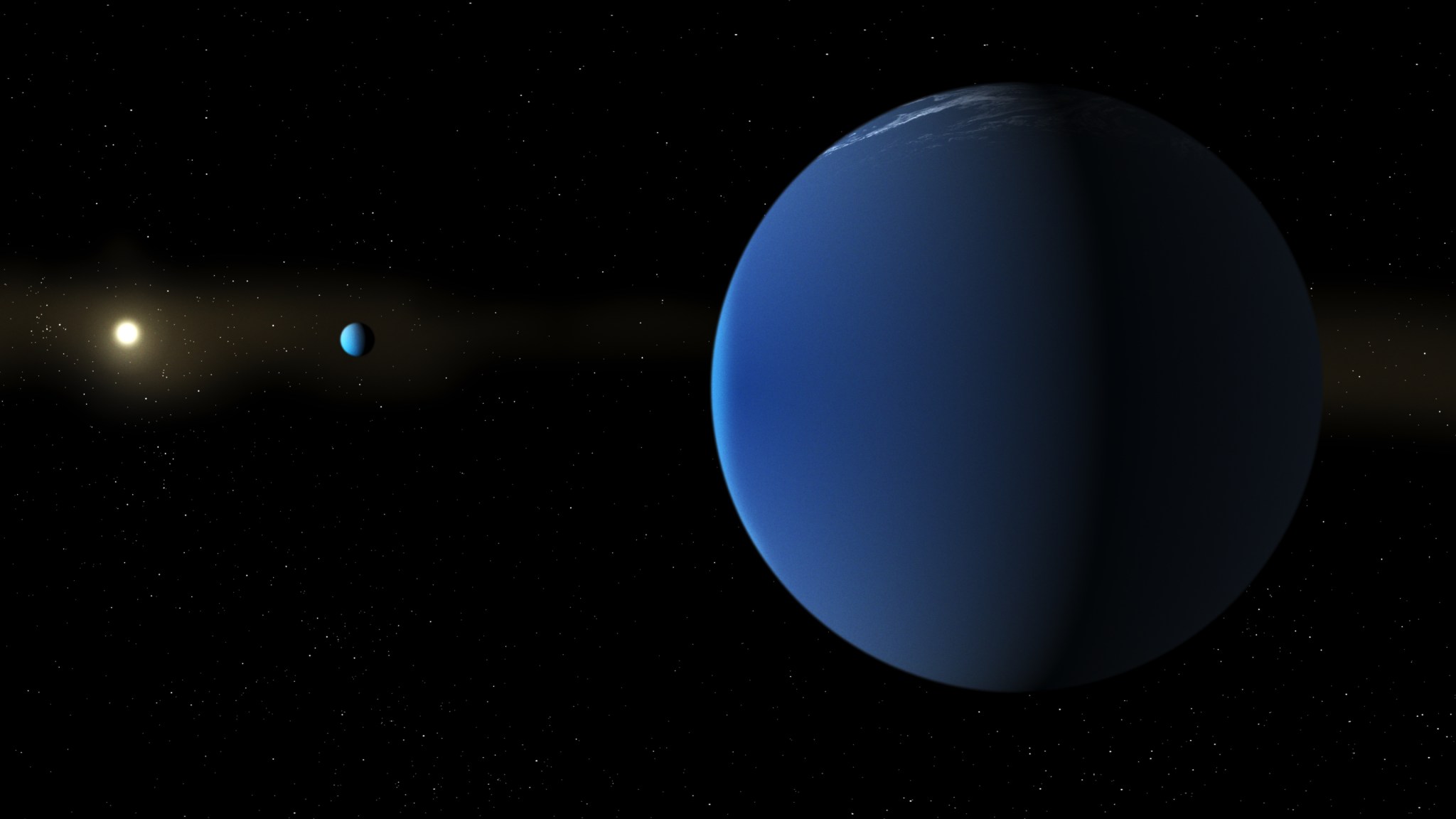
This illustration depicts the Sun-like star TOI-791 and two giant planets that NASA’s TESS space telescope discovered in its orbit. These planets, designated TOI-791 b and TOI-791 c, are roughly the size of Jupiter but a tiny fraction of its mass, meaning they have an extraordinarily low density. NASA / Daniel Rutter Data from NASA’s TESS (Transiting Exoplanet Survey Satellite) mission has revealed two new “super-puff” planets, giant worlds so light that their density is comparable to cotton candy. Scientists calculate that these Jupiter-sized planets—named TOI-791 b and TOI-791 c—are the “puffiest” worlds ever found. The planets orbit a Sun-like star named TOI-791 that is approximately 1,113 light years away from Earth. The TESS mission first detected the planets by watching for repeated dips in TOI-791’s brightness, a telltale sign that a planet is transiting, or passing in front of, a star. Further study revealed two large planets with unusual features. TOI-791 b is nearly the same size as Jupiter but contains just 3.0 percent of Jupiter’s mass. TOI-791 c is even larger than Jupiter but contains just 5.9 percent of Jupiter’s mass. “The main reason these planets are interesting to study is that we didn’t expect to see them at all,” said Jon Jenkins, the science lead for the Science Processing Operations Center at NASA’s Ames Research Center in California’s Silicon Valley, which provided the science-ready data from TESS analyzed in this study. “They represent a puzzle for us to solve about how giant planets like Jupiter and the super-puffs form.” This graphic depicts the two giant planets orbiting the Sun-like star TOI-791 as compared to some of the planets in our solar system. These planets are roughly the size of Jupiter but a very tiny fraction of its mass. NASA’s TESS mission detected the shadows of these planets as they passed in front of their star. There is no direct imaging. Therefore, the appearance of the TOI-79 planets in this illustration are an artist’