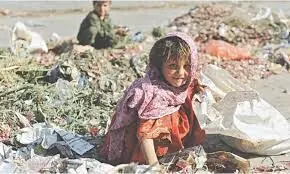
ECONOMIC SURVEY 2026-27: Poverty surges 7pc, pushing 27m people into financial distress
Why this matters: local context for readers following news across Pakistan and the region.
ISLAMABAD: National poverty rate has surged by seven per cent, pushing approximately 27 million additional people into financial distress over the last six years and bringing the total number of the impoverished population of the country to 70m, according to the Economic Survey 2025-26. The survey figures show that poverty was 21.9pc in 2018-19 which increased to 28.9pc in 2024-25. Poverty remained significantly higher in rural areas. Rural poverty increased from 28.2pc to 36.2pc, while urban poverty increased from 11pc to 17.4pc over the same period. At the provincial level, poverty increased across all major provinces. In 2024-25, poverty was estimated at 23.3pc in Punjab, 32.6pc in Sindh, 35.3pc in Khyber Pakhtunkhwa, and 47pc in Balochistan. In 2018-19, the corresponding rates were 16.5pc, 24.5pc, 28.7pc, and 41.8pc, respectively. Balochistan continued to record the highest poverty incidence, while Punjab remained the lowest among the four provinces, the survey says. The surge in poverty is attributed to prolonged economic shocks, including record-high inflation, currency depreciation, IMF stabilisation measures, catastrophic climate events like floods and the Middle East conflict. The adverse situation has weakened people purchasing power, raised food insecurity and strained remittance-receiving families, the survey says. The updated estimates also indicate a rise in inequality. The national Gini coefficient increased from 28.4 in 2018-19 to 32.7 in 2024-25. The increase was visible in both urban and rural areas. Urban inequality rose from 31.0 to 34.4, while rural inequality increased from 23.4 to 36.6 during 2018-19 and 2024-25. This suggests that the recent rise in poverty was accompanied by wider disparities in income distribution. Provincial inequality also moved upward over the same period. In 2024-25, the Gini coefficient stood at 32.0 in Punjab, 35.9 in Sindh, 29.4 in KP, and 26.5 in Balochistan. In 2018-19, the corresponding values were 28.4, 29.7, 24.