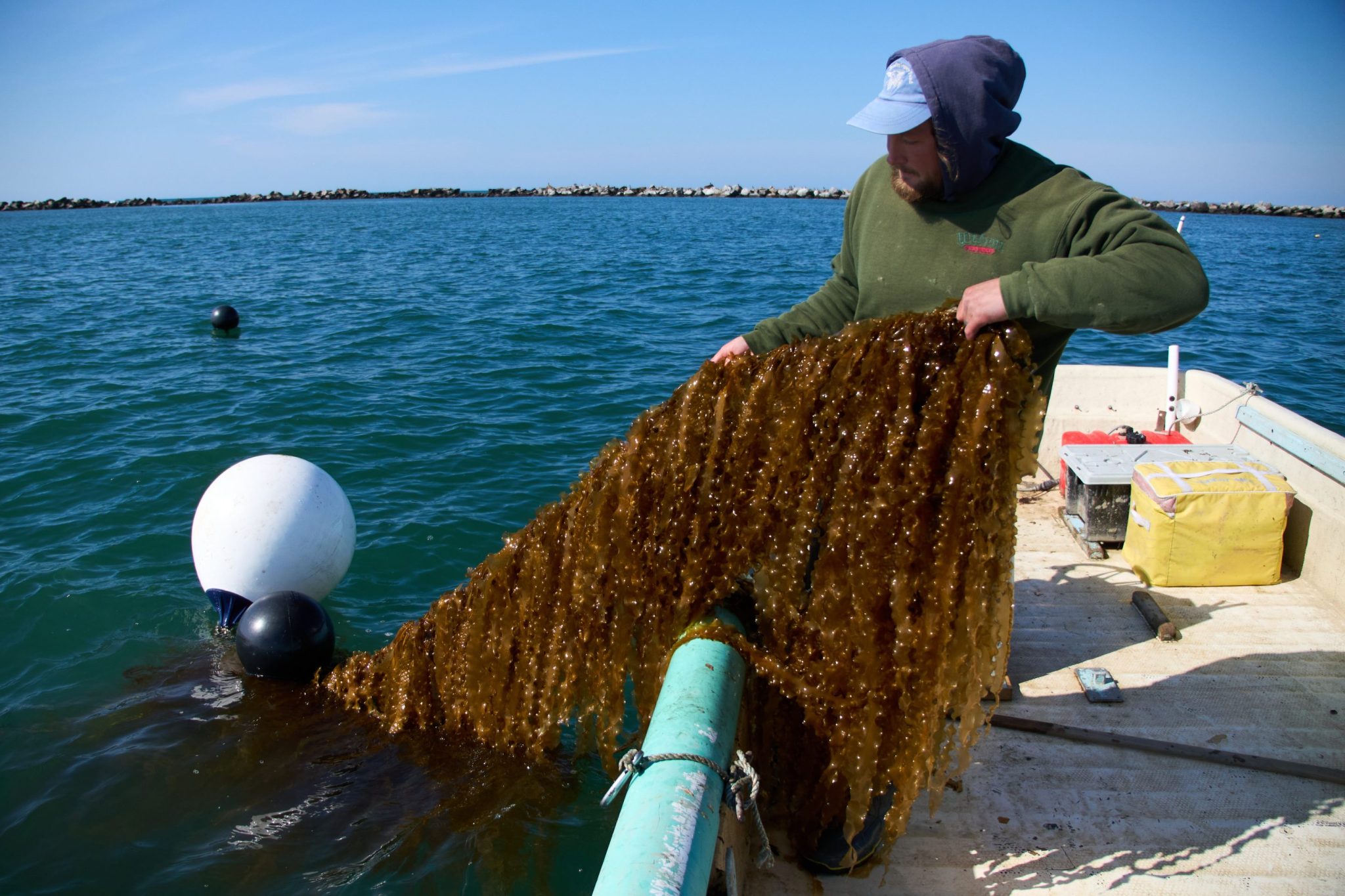
Gas crisis? Kelp could be the biofuel answer to high gas prices, but only if the government removes some red tape
Green cells whirl around a red-light chamber, propelled by a blade through bubbling water. These little seaweed cells, called gametophytes, will develop into a strain of fast-growing kelp — part of what was once a government-funded initiative to develop sustainable biofuels for American transport. Electricity from solar and wind energy can power cars, however ships and aircraft largely run on liquid fuels made with a large percentage of oil or gasoline. When burned, those emit carbon dioxide, a greenhouse gas that causes global warming. Biofuel, refined from organic material like plants or algae, is a potential option to change the fuel makeup. One kind of biofuel comes from kelp. Through a process that uses heat and pressure to produce fuel, known as hydrothermal liquefaction, this humble seaweed could power ships and aircraft without any petroleum. “We need other sources of energy that are sustainable, we can’t just rely on petroleum,” said Scott Lindell, a marine scientist at the Woods Hole Oceanographic Institution about a 90-minute drive south of Boston. “There’s hardly anything simpler, or anything that grows quite as fast and as sustainably, as seaweed.” ___ EDITOR’S NOTE: This story is a collaboration between the MIT Graduate Program in Science Writing and The Associated Press. ___ Existing biofuels, like corn-derived ethanol, primarily work as gasoline additives. Corn crops require agricultural land, fresh water and pesticides while kelp, by contrast, can be grown in the ocean with minimal resources. Although any bioethanol — whether produced from corn or kelp — releases hazardous gases when burned, such as acetaldehyde, these fuels produce fewer greenhouse gases overall compared to petroleum-based fuels. Researchers like Lindell have successfully bred kelp varieties that in some cases produce up to three times more biomass than conventional strains. Yet energy companies are hesitant to invest in large-scale aquaculture projects without demonstrated demand,