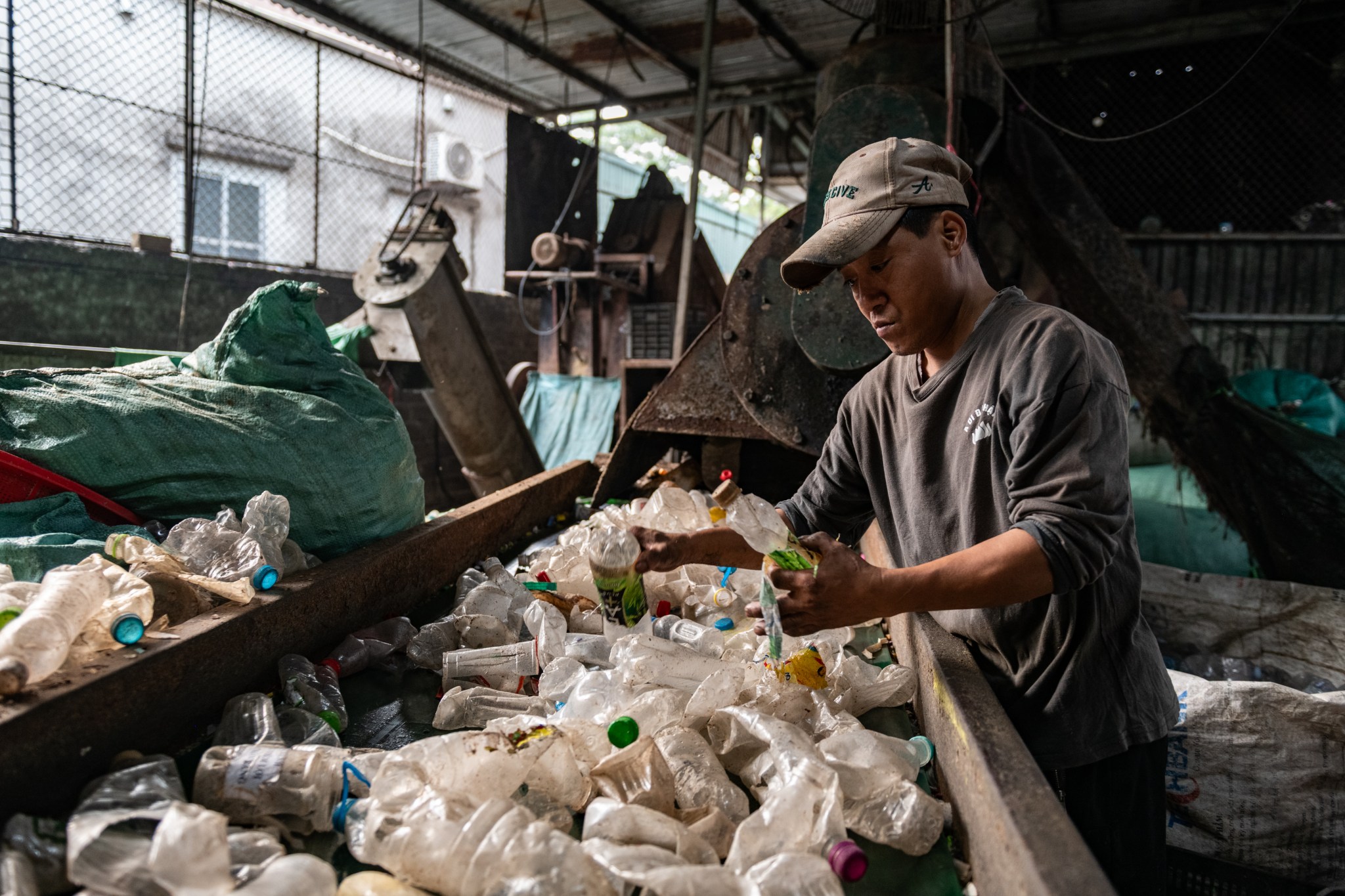
The Iran war’s oil shock causes a plastic shortage in Asia, squeezing industries and prompting a ‘Middle East plus one’ rethink of supply chains
Asia’s oil crisis is quickly worsening into a full-blown material shortage, as falling stockpiles of plastics threaten industries as far apart as food production and medical equipment. The region imports around 70% of its supply of naphtha, a petrochemical feedstock used to produce polymers like polyethylene (PE) and polyethylene terephthalate (PET), from the Middle East. These polymers are critical inputs for everyday products like food packaging, cosmetic containers, plastic bags, and medical consumables, all of which have skyrocketed in price since the Iran war began and the materials needed to make plastics got locked behind the Strait of Hormuz. “The stability of plastic as a basic industrial material has been shaken,” says Chen Ping-Kuo, a professor in industrial engineering and management at Japan’s Ritsumeikan Asia Pacific University (APU). He notes that as Asian societies depend heavily on plastic, the disruption will “move quickly through supply chains”. On April 20, South Korea’s health regulators initiated a nationwide probe into intermediaries and firms suspected of hoarding syringes, which alongside other medical products like needles and gloves, are produced from oil-derived chemicals. Much as how the COVID pandemic pushed companies to consider a “China plus one” strategy to reduce their reliance on Chinese manufacturing, the Iran war might also get people to consider a “Middle East plus one” strategy, reducing their exposure to a single chokepoint. “If the disruption persists for a year or more, forced adaptations are likely to be seen,” says Li Dong, a supply chain engineering expert from Singapore’s Nanyang Technological University. “China and other non-Hormuz-dependent producers will gain influence.” Where is the plastics shortage hitting hardest? Plastics and other petrochemical based products can be found throughout the modern economy, in packaging, consumer goods, semiconductors, and, worryingly, health care. “Hospitals and clinics are preempti