NASA-Supported Small Spacecraft Launches to Study Solar Particles
Why this matters: new research or scientific developments with potential real-world impact.
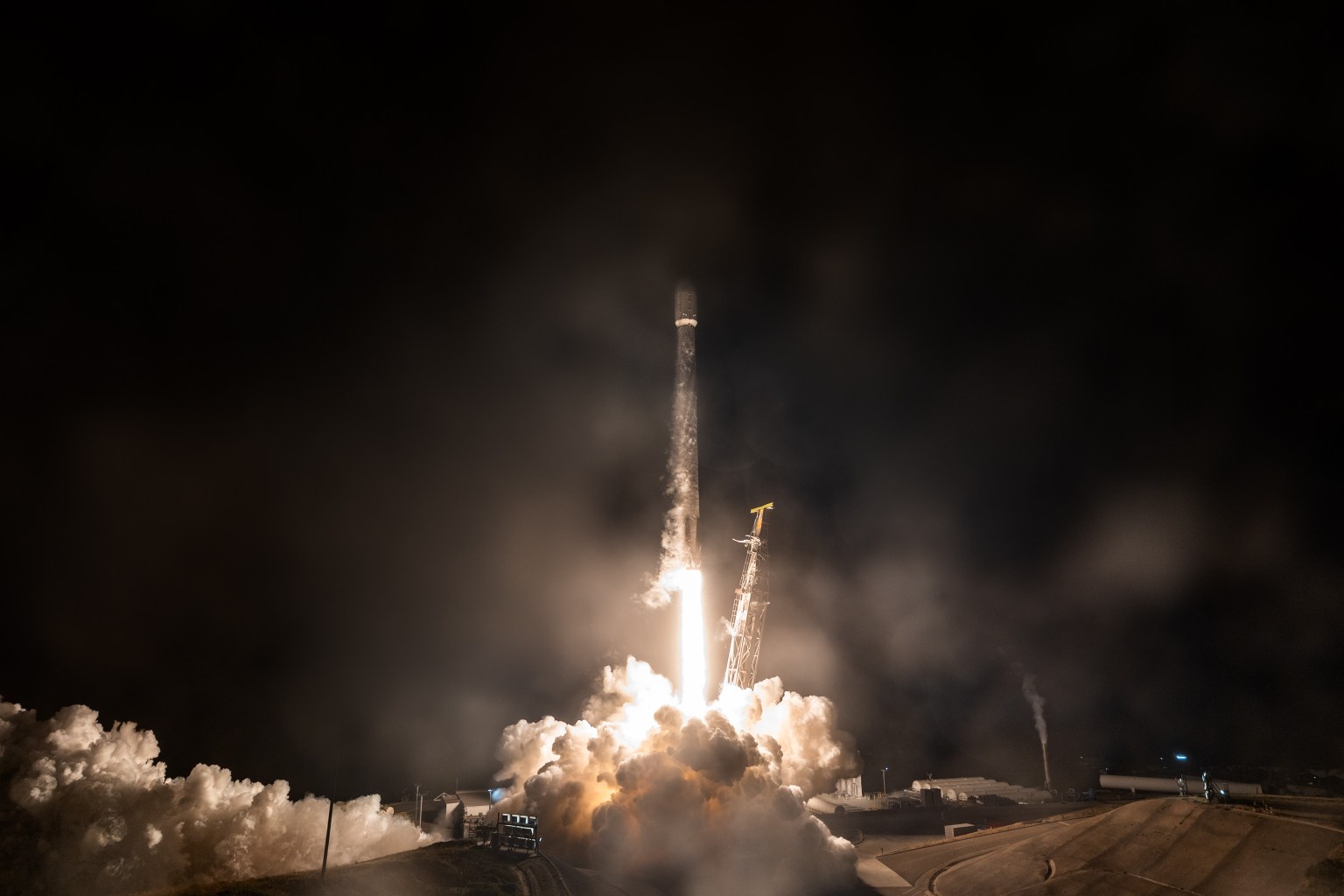
EDT (12 a.m. PDT) on Sunday, May 3, aboard a Space X Falcon 9 rocket from Space Launch Complex 4 East at Vandenburg Space Force Base in California. Credits: Space X Through NASA, a university-designed small spacecraft is paving the way to studying particles, known as neutrinos, that move through the universe at near-light speeds. The Solar Neutrino Astro-Particle PhYsics CubeSat, known as SNAPPY, launched at 12 a.m. PDT on Sunday aboard a SpaceX Falcon 9 rocket from Space Launch Complex 4 East at Vandenberg Space Force Base in California and was deployed via launch integraor Exolaunch. The SNAPPY project will test a prototype solar neutrino detector in low Earth polar orbit. Weighing approximately half a pound, the prototype detector consists of four crystals and is encased in a shielding block made of epoxy loaded with tungsten dust to match the density of steel. The detector and a dedicated electronics stack for power and readout purposes are housed inside a CubeSat platform from Kongsberg NanoAvionics. The Solar Neutrino Astro-Particle PhYsics (SNAPPY) CubeSat being prepared for integration into the EXOpod Nova deployer.SpaceX The idea behind SNAPPY was sparked by interest in NASA’s Parker Solar Probe mission. As the probe prepared to become the first spacecraft to fly through the Sun’s corona, Nick Solomey, a professor of mathematics, statistics, and physics at Wichita State University, was inspired knowing the spacecraft would pass an area where the solar neutrino flux, the rate of particles passing through a specific area, is nearly 1,000 times stronger than what reaches Earth. “All life on Earth – past, present, and future – relies on the Sun,” remarked Solomey, whose career is centered on elementary particle physics. “We must work to understand this ball of energy to the best of our abilities because it’s wh