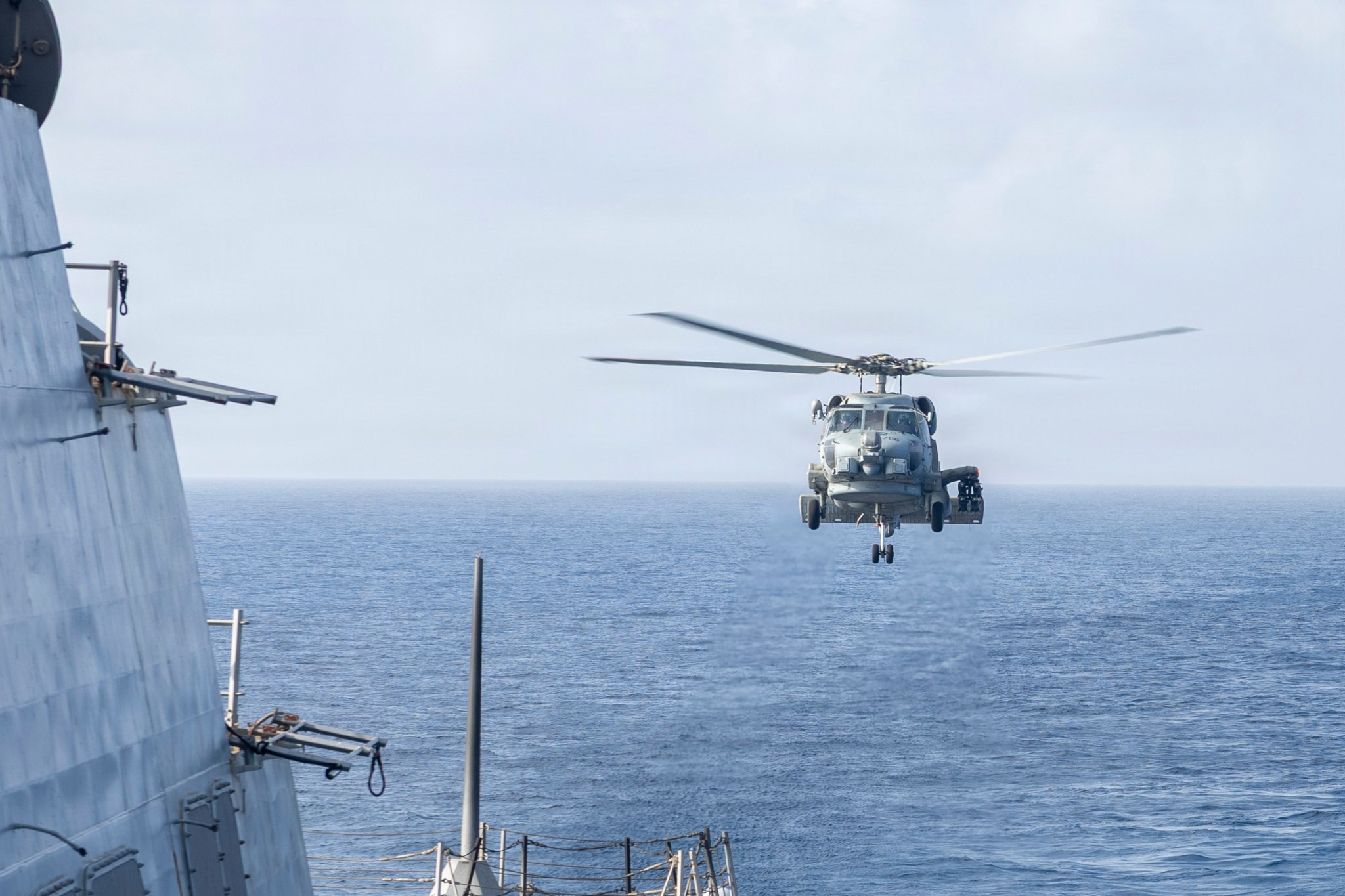
Damn the torpedoes — More ships are quietly slipping through the Strait of Hormuz as helicopters scare off Iran’s fast-attack boats
The U.S. and Iran remain deadlocked on a deal to extend their ceasefire and reopen the Strait of Hormuz, but reports indicate that some ships aren’t waiting any longer and are instead crossing the contested waterway with guidance from the U.S. military. The strait has been effectively shut for three months, keeping one-fifth of the world’s pre-war oil supplies as well as 2,000 ships trapped in the Persian Gulf. While the U.S. and Israel have decimated Iran’s conventional military force, the Islamic Revolutionary Guard Corps has retained the ability to keep the strait closed with the threat of missiles, drones, mines and fast-attack boats. Since then, most ships seeking to exit or enter have sought approval from the IRGC, which mined the main channel and created another path through its territorial waters. Last month, the U.S. Navy began mine-clearing operations and sent two destroyers through the strait to re-establish freedom of navigation via an alternate route near Oman’s coast. That was followed by Project Freedom earlier this month to get more ships out with U.S. help, but it ended after only a few days. Despite the short-lived effort, shipowners told Bloomberg that traffic has picked up over the last week as the U.S. military has provided assistance on how to navigate through the Strait of Hormuz. U.S. Central Command has insisted that it’s not escorting ships. Instead, it’s offering advice to commercial vessels in the region. A source told Bloomberg that Iranian fast boats approached a group of vessels transiting through the strait. But the Iranian boats turned away after helicopters suddenly appeared, the report said without identifying the helicopters. Central Command didn’t immediately respond to a request for comment. Ships that have crossed include some that had remained stranded in the Gulf since the war began as well as ships entering and exiting, according to Bloomberg. They also include ships from the UAER