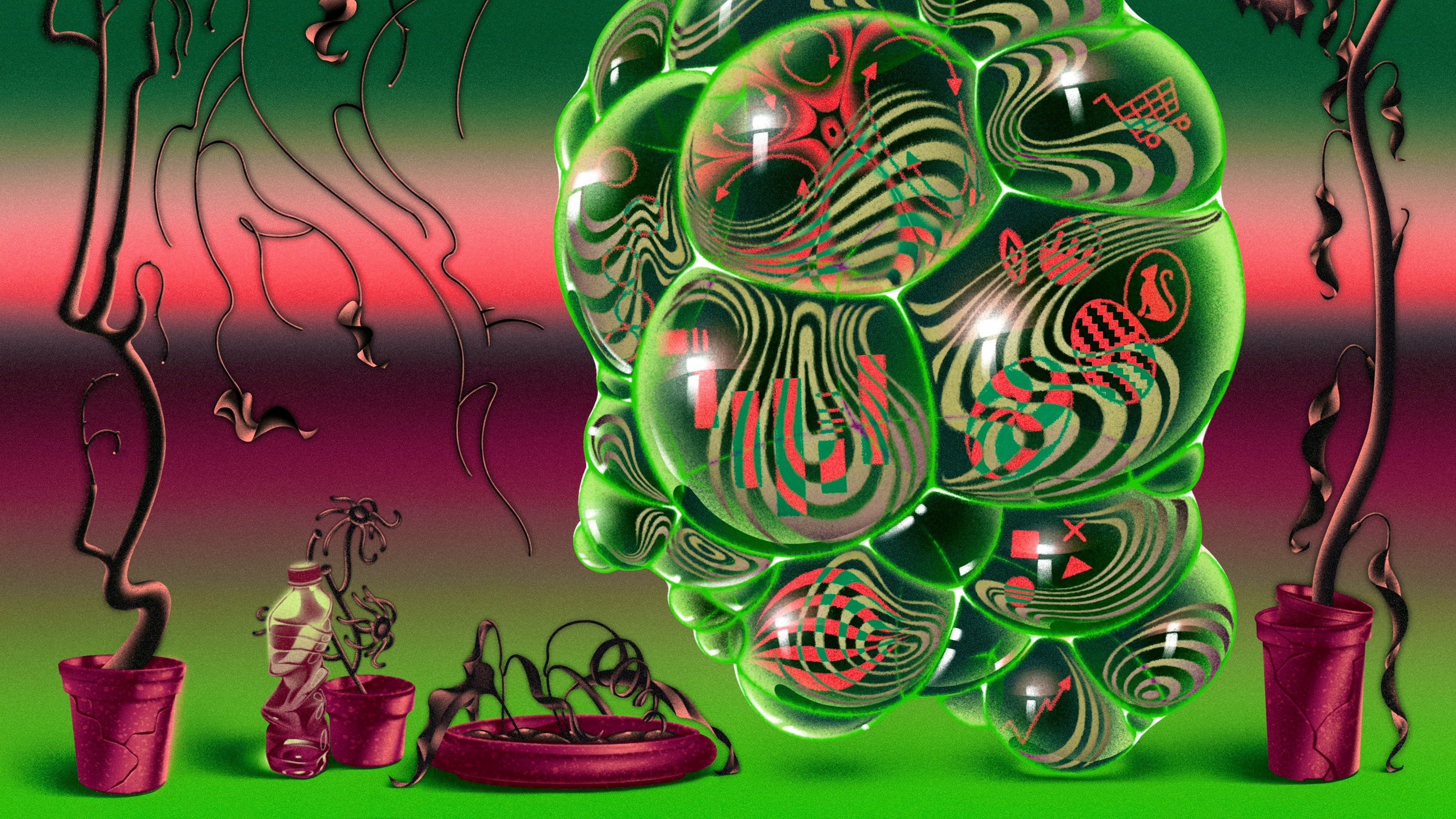
Why People Are Actually So Anxious About Attention
Last year, I took a drastic step to protect my attention: I cut off my home internet service. I already refuse to get a smartphone and have long paid for an app to block internet access on my laptop when I need to be productive. Yet I was still wasting too many late-night hours scrolling X, or watching CGI reenactments of plane crashes and VHS rips of old Letterman episodes. Even resisting took an effort that I resented; the internet, I became convinced, was making me stupid, and I had no one to blame but myself.Attention, these days, is something that many Americans seem to regard as an inherent virtue whose purity they can try to protect or allow to be despoiled. A diminished attention span is a sign of personal weakness, or even intellectual debasement. On social media, people talk of having “German-shepherd attention spans” and liken their condition to “brain damage.” To reduce one’s attention span, so the logic implies, is to reduce one’s humanity.But this might be an outdated way of thinking about attention—and one that blames the individual for dispensing something that, more accurately, is being extracted. Some of the most lucrative companies on the planet, after all, are those that harvest attention. Perhaps many people feel bad about their attention span not because it’s too short, but because they sense that they’re running themselves ragged by giving away a precious commodity for far less than it’s worth.According to neurologists, humans have many types of attention. “Serial” attention, for instance, might be used to monitor gadgets as they move past on a factory assembly line, whereas the ability to focus on a face while ignoring noise around it is “spatial” attention. Today’s laments about deteriorating focus, though, generally refer to “sustained” attention, which is when one homes in on a single item for a long period. And people are faced with so many distractions that their capacity to singularly focus does seem to be undergoing a fundamental chang