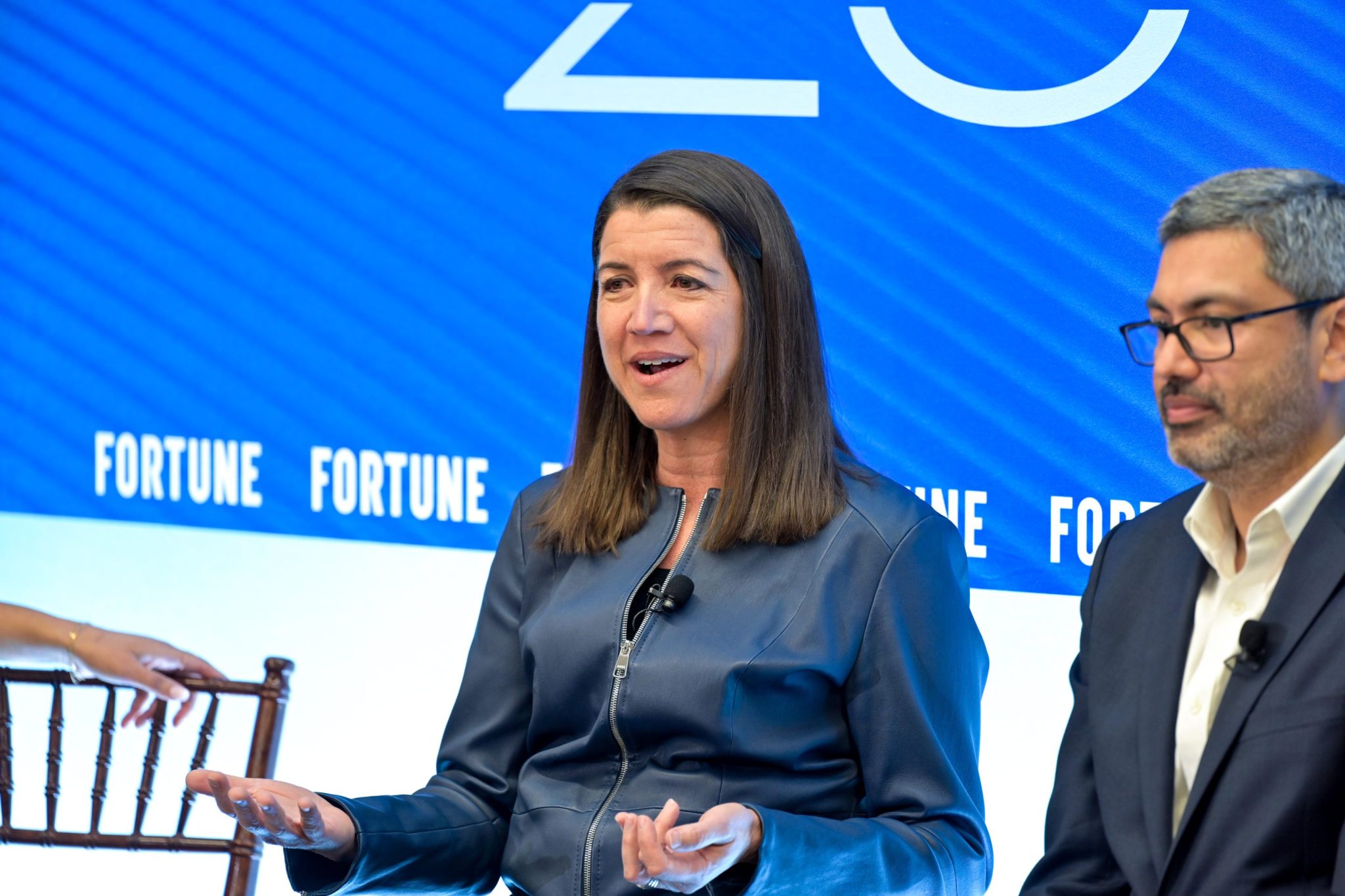
Citi, Ford, and Experian share their strategies for scaling AI agents
We hear it from our customers every day,” Heisman said recently on a panel at Fortune’s Brainstorm Tech conference. “The big question is, can you trust it? Is it right? And if it’s wrong, can you stop it?” As businesses contemplate letting AI agents chain together sequences of tasks, each based on the output of AI models, trust is more important than ever. And the only way to build that trust, according to Heisman and other business leaders on the panel, is to build visibility and control into systems. “For us visibility, traceability, is not optional, it is foundational. It is how we look at every decision,” said Nikhil Joshi, the chief information officer in the markets division at Citi, the financial giant that moves trillions of dollars every day across more than 100 countries Citi spent much of 2024 building a centralized technological foundation for all its apps and agents, Joshi said. That foundation has made the company much more comfortable bringing agents into production. “There’s only one single way to deploy an agent at Citi, and that’s through this central framework,” Joshi said. “That means every agent is registered through this process, every agent is monitored, every agent is audited, every agent is governed.” At a time when everyone else seems to be plowing full speed ahead into AI, Citi’s deliberative and centralized tech system might strike some as too conservative. But, Joshi said, it actually helps you move faster in the long run. “Being AI conservative is not a bad phrase,” he said. Experian Chief Innovation Officer Kathleen Peters concurred, and explained how the consumer credit reporting firm has created a system to