New Material Could Help NASA Melt Moon Rocks, Harness Lunar Resources
Why this matters: new research or scientific developments with potential real-world impact.
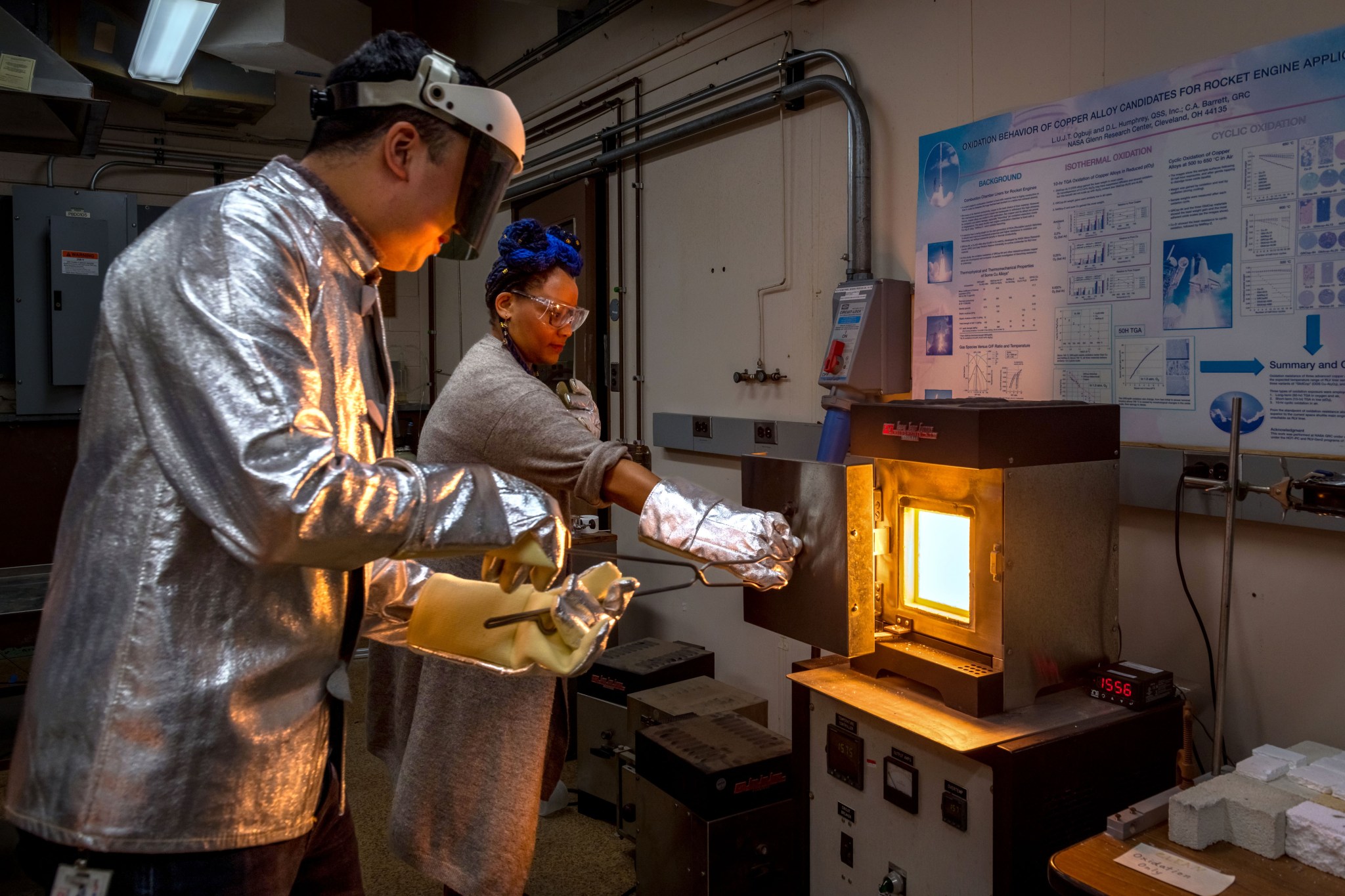
Kevin Yu, left, and Dr. Jamesa Stokes prepare to remove a sample of a new material they discovered from a furnace inside a laboratory at NASA’s Glenn Research Center in Cleveland in October 2024. Quenching, or bringing the temperature of the sample down as quickly as possible, helps to ensure no more reactions occur as the sample cools so scientists can focus on studying how it behaves at high temperatures.NASA/Jef Janis A material recently discovered and tested at NASA’s Glenn Research Center in Cleveland could help astronauts pack lighter for future missions to the Moon. NASA is researching ways explorers could “live off the land” by harnessing lunar resources, including melting Moon rocks to extract metals for building infrastructure and oxygen for fuel and life support. As part of a graduate fellowship through the agency’s Space Technology Graduate Research Opportunities, Dr. Kevin Yu, who now works as a technologist at NASA’s Jet Propulsion Laboratory in Southern California, teamed up with Dr. Jamesa Stokes, a materials research engineer at NASA Glenn, to study how a variety of substances interacted with liquefied Moon dust. You could call it lava, because it’s basically rocks that are crushed up and then melted. It’s very corrosive, and it will very quickly eat through a lot of commonly used refractory, or heat-resistant, materials. Dr. kevin yu Technologist at NASA's Jet Propulsion Laboratory About six months into their research, Stokes and Yu realized they’d stumbled across something promising and entirely new. After combining simulated lunar dust with a compound called scandium oxide and heat treating the mixture using a red-hot furnace, they discovered that an unknown material had formed. The researchers checked and double-checked their work, but the material didn’t match any of the more than 1 million substances in their X-ray analysis database. A sample of the