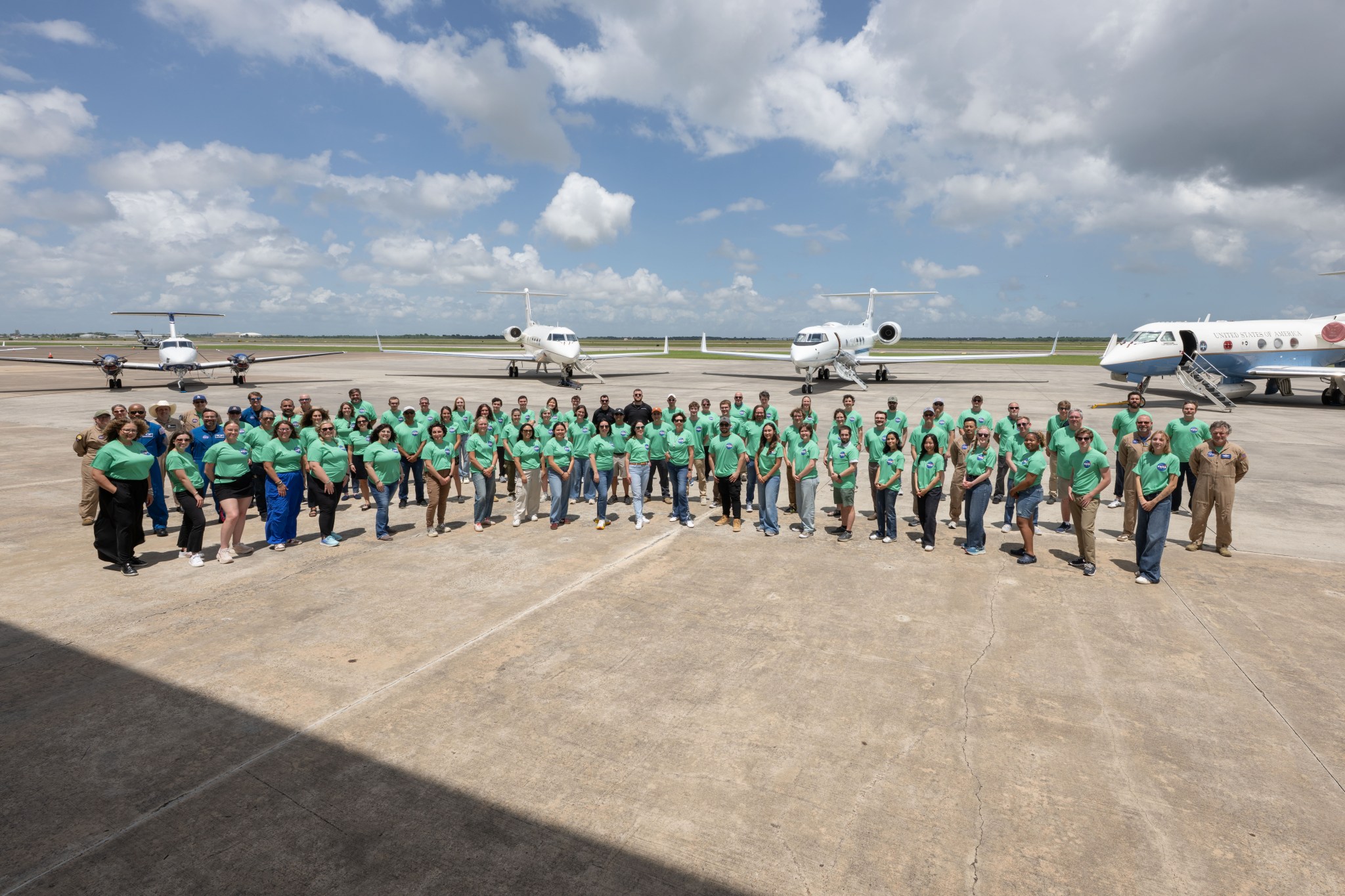
NASA Students Get Airborne View of Atmospheric Science at Ellington Field
Why this matters: new research or scientific developments with potential real-world impact.
From June 3 to 13, aircraft at Ellington Field in Houston gave students a firsthand look at how scientists study Earth from the air. NASA Student Airborne Research Program students, researchers, and pilots gather with NASA aircraft at Ellington Field in Houston on June 9, 2026. NASA/Bill Stafford Through NASA’s Student Airborne Research Program, or SARP, students learned how airborne field campaigns collect data used in atmospheric science, ecology, air quality research, and climate modeling. This year’s activity took place alongside an air quality campaign led by NOAA (National Oceanic and Atmospheric Administration), giving students a chance to see how federal agencies work together to study Earth’s atmosphere. From left: Kelly Griffin, Elizabeth Lockerby, and Vidal Salazar from NASA Ames Research Center’s Earth Science Project Office stand in front of NASA aircraft at Ellington Field. NASA/Bill Stafford “Every SARP flight is more than a mission; it’s a classroom in the sky, where students learn how science is planned, executed, and transformed into discovery,” said NASA’s Ames Research Center Earth Science Project Specialist Vidal Salazar. The NOAA effort allowed NASA to build on active atmospheric research already underway in Texas. By integrating additional aircraft into the campaign, students gained access to a real-world research environment and saw how scientists collect data from the air. Students attend daily lectures, take coding classes, work with instrument teams, and use campaign data and NASA’s extensive archive to design, implement, and present independent research projects. “SARP is full of passionate individuals who work together to inspire the next generation of Earth scientists,” said SARP Project Manager Joelle Hopkins. Students work with NASA subject matter experts throughout the program, giving them exposure to a range of career paths in airborne science. “It is great seeing different students with very diverse backgrounds exploring the next s