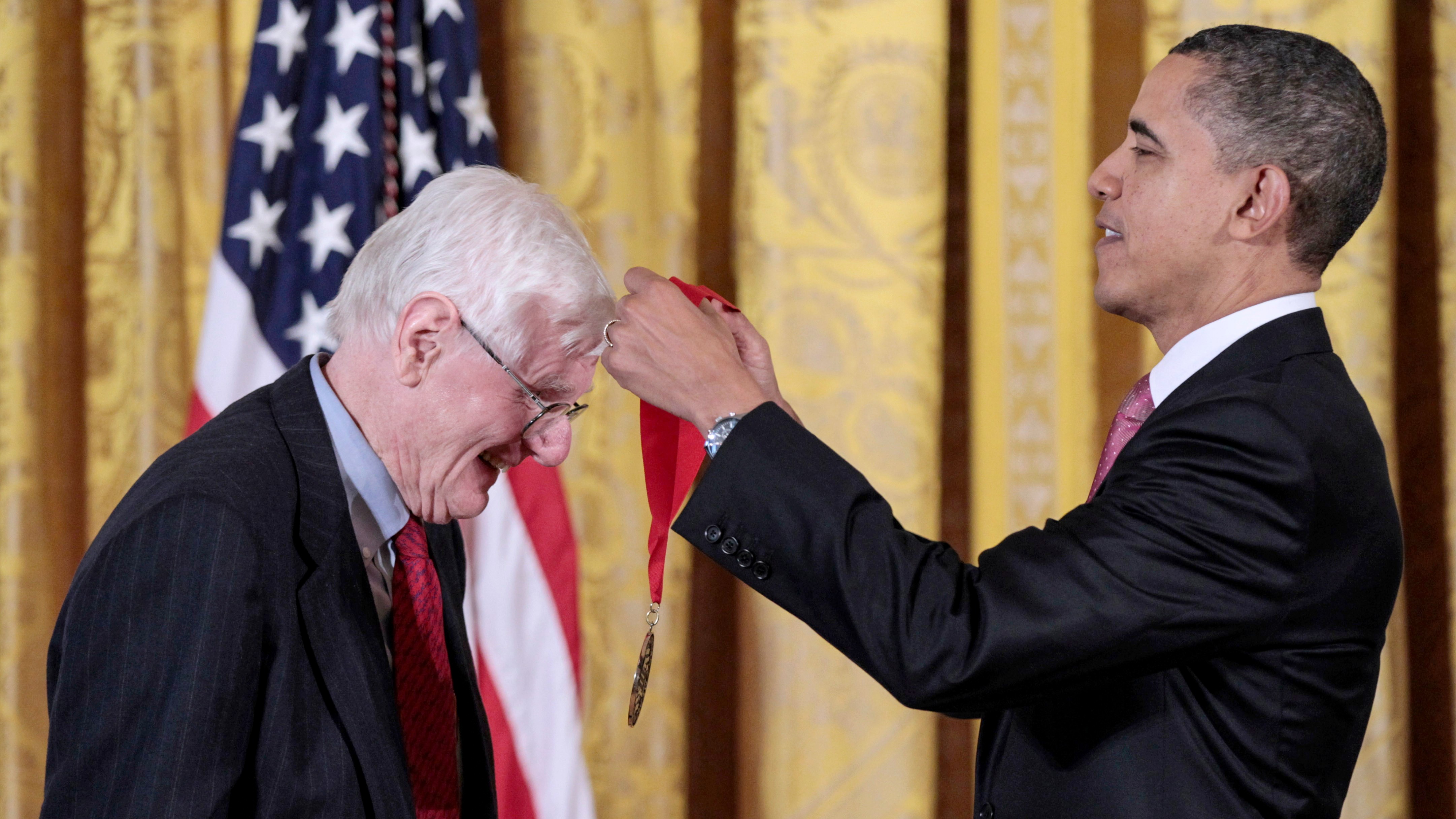
The Revolutionary Gordon Wood
The American Revolution was revolutionary. That’s the deceptively simple claim to which Gordon Wood, the historian who was tragically killed at the age of 92 on Sunday, devoted his career. The Revolution, of course, overthrew a monarchy—but the freedoms it advanced were unequally enjoyed, and the Founders left a great deal undone. But Wood insisted that, even so, we not lose sight of its fundamental character.“The revolution did more than legally create the United States; it transformed society,” Wood wrote in his 1991 book The Radicalism of the American Revolution, which won the Pulitzer Prize for History. “Americans,” he argued, “had become, almost overnight, the most liberal, the most democratic, the most commercially minded, and the most modern people in the world.” By 2011, in The Idea of America, he had expanded his claim: The Revolution “was an event that opened up a new era in politics and society, not just for Americans but eventually for everyone in the world.” Wood’s vision of the Revolution gives us much to celebrate in 2026.Wood became one of the most prominent historians of the United States. The longtime Brown University professor wrote 10 books and many articles, but it was The Radicalism of the American Revolution that propelled him to the forefront of his field. Although Wood himself would acknowledge that the American Revolution was not built on ideas alone, his ardent advancement of America’s Revolutionary ideals remains his most important and lasting legacy.Wood spent his career studying the Revolution, but within the academy, he was something of a revolutionary himself. Not only did he help popularize the study of ideas in early America, but his scholarship also helped illuminate how America changed from a hierarchical, monarchical society to a democratic republic. In a subfield fixated on economic explanations, he emphasized how personal experiences could turn English subjects into Americans. He stressed the distinctiveness of the Founders and