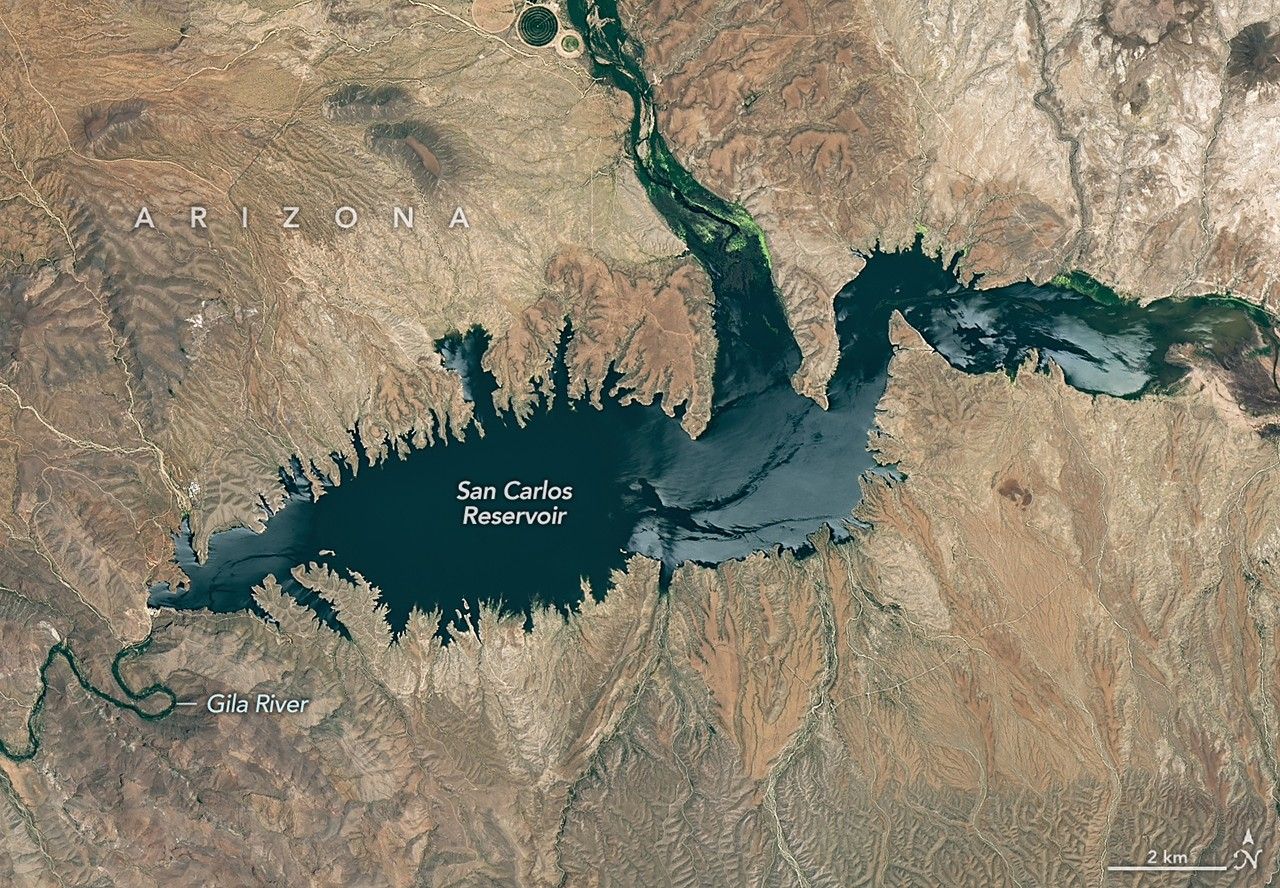
Low Water at San Carlos Reservoir
Why this matters: new research or scientific developments with potential real-world impact.
Earth Observatory Science Earth Observatory Low Water at San Carlos Reservoir Earth Earth Observatory Image of the Day EO Explorer Topics All Topics Atmosphere Land Heat & Radiation Life on Earth Human Dimensions Natural Events Oceans Remote Sensing Technology Snow & Ice Water More Content Collections Global Maps World of Change Articles Earth Matters Blog Blue Marble: Next Generation EO Kids Mission: Biomes About About Us Subscribe 🛜 RSS Contact Us Search June 7, 2023 May 22, 2026 The reservoir appears lake-like and expansive in an image acquired in June 2023. NASA Earth Observatory/Michala Garrison The reservoir is nearly empty by May 2026. The Gila River’s natural channel is now visible and flanked with green vegetation in what had been the bottom of the reservoir. NASA Earth Observatory/Michala Garrison June 7, 2023May 22, 2026 The reservoir appears lake-like and expansive in an image acquired in June 2023. NASA Earth Observatory/Michala Garrison The reservoir is nearly empty by May 2026. The Gila River’s natural channel is now visible and flanked with green vegetation in what had been the bottom of the reservoir. NASA Earth Observatory/Michala Garrison June 7, 2023 May 22, 2026 CurtainToggle2-Up Image Details Little water remains in the San Carlos Reservoir in May 2026 (right) compared to fuller conditions in June 2023 (left). Images were captured by the OLI (Operational Land Imager) on the Landsat 9 and 8 satellites, respectively. NASA Earth Observatory images by Michala Garrison. The Gila River is among the Southwest’s most important rivers, delivering water for people, farms, and wildlife while linking the snow-fed mountains of southwestern New Mexico to the desert lowlands of southwestern Arizona. In wetter years, seasonal snowfall on the Mogollon Mountains and Black Range provides much of the river’s spring flow and helps refill San Carlos Reservoir, which is formed by the Coolidge Dam. When filled to capacity, the reservoir is one of Arizona’s