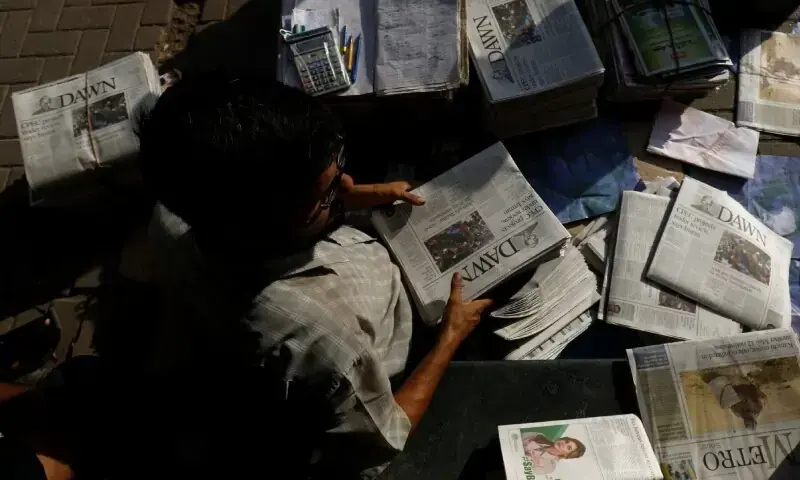
‘Notices, cases, red lines and violence’ put media in a bind
Why this matters: local context for readers following news across Pakistan and the region.
ISLAMABAD: Pakistan’s media is caught in a bind — squeezed simultaneously by legal pressure, physical violence, digital harassment and financial coercion. That is the gist of a recent report, released by the Pakistan Press Foundation (PPF) ahead of World Press Freedom Day 2026, documenting at least 233 incidents of journalists being targeted between January 2025 and April 2026. The violations include 67 assaults, 67 criminal complaints, 11 arrests, 11 detentions and three abductions. The Pakistan Electronic Crimes Act (Peca) looms large over the report. Amended at the start of 2025 and, in PPF’s words, “bulldozed through parliament” without stakeholder consultation, it has become the instrument of choice against journalists. Of the 67 criminal complaints documented, 34 invoked Peca. Notices and summons from the National Cyber Crime Investigation Agency (NCCIA) have become, the report says, “a repeat occurrence.” The pattern is grimly predictable: a journalist publishes something inconvenient, and a complaint follows. PPF report documents 233 incidents of violence, legal action and censorship against journalists over 16 months The law’s reach has extended to those who defend journalists too: human rights lawyers Imaan Zainab Mazari-Hazir and her spouse Hadi Ali Chattha, who had represented media professionals in Peca cases, were handed a 17-year conviction under the same legislation. According to the report, legal pressure has not replaced physical danger — it has been layered on top of it. For example, the report notes, journalists covering the Aurat March in Islamabad were detained by police and held for nearly eight hours on March 8. PPF also noted a troubling disregard for existing media safety laws: even when arrests are made, journalists have been compelled to surrender their electronic devices in violation of privacy protections those laws guarantee. The report particularly focuses on the targeting of women in the media, especially through AI-generated content