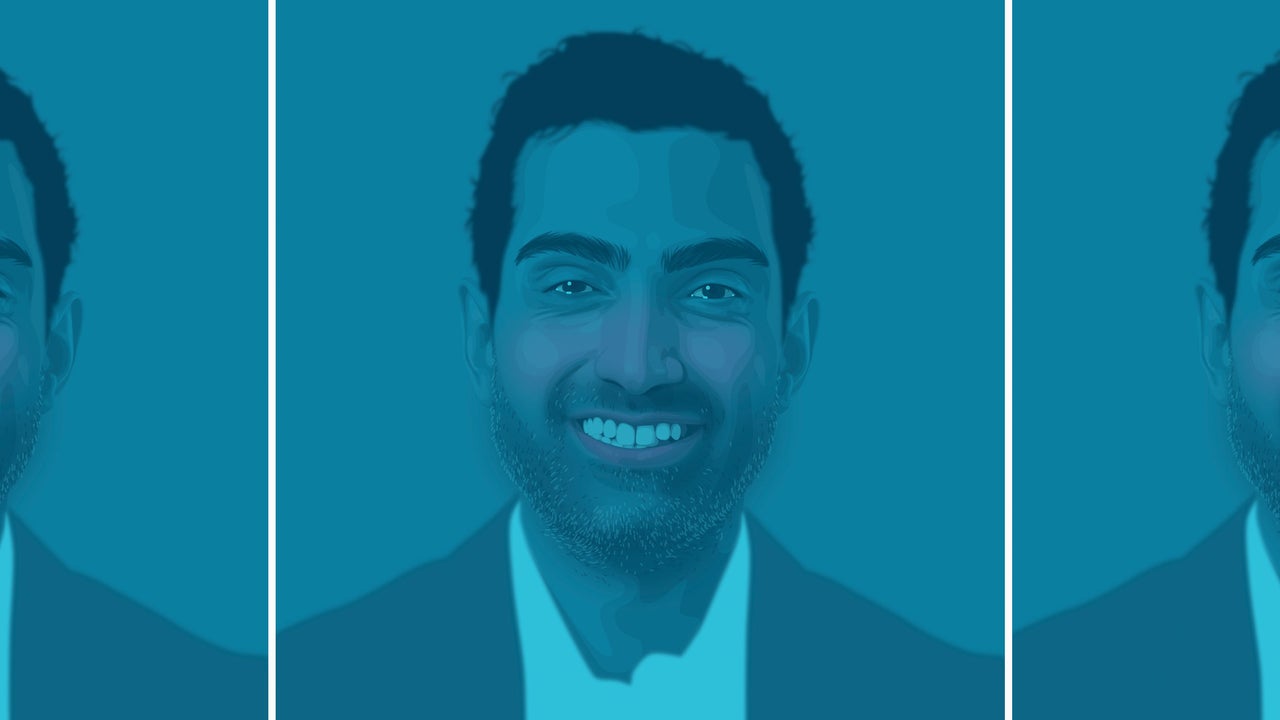
Rajiv Dattani is bringing insurance to the AI agent boom
AI agents come with real risks: The more autonomous they are, the more likely they are to violate data privacy rules or international SPAM rules, and the easier they become for hackers to attack. But until recently there was no standard for measuring these risks and no entity to insure against them. Meanwhile, enterprises will increasingly need to trust AI agents to do real work. Rajiv Dattani’s Artificial Intelligence Underwriting Company (AIUC) has begun insuring agent providers against these risks. Working with a consortium of around 150 Fortune 1000 chief information security officers, risk managers, and security leaders, Dattani’s company developed a standard for measuring how prone an agent may be to things like jailbreaks, hallucinations, or data leaks. The standard contains six main risk categories including data, security, safety, reliability (including hallucinations), accountability, and societal risk. Within each of those categories AIUC’s standard has requirements for technical controls and security systems. “So we want to see proof [that] if there’s PII (personally identifiable information) being handled by the system that the agent doesn’t have access to this PII and doesn’t have access to the system that has it,” Dattani says. [Illustration: Derek Abella] Using the standard, AIUC takes a close technical look at the agents of potential policyholders and determines insurance rates accordingly. AIUC’s first insurance policyholder is ElevenLabs, the $11 billion AI voice company used by employees at over 75% of the Fortune 500. Now, every agentic product that a customer of ElevenLabs uses will be backed up by a $50 million policy. In order to meet the AIUC-1 certification standard, ElevenLabs’ systems underwent 5,835 individual technical evaluations, including adversarial jailbreaks, unauthorized tool calls, and voice identity hijacking, before the policy was written. The policy is backed up by Lloyd’s of London. Insurance can be seen as