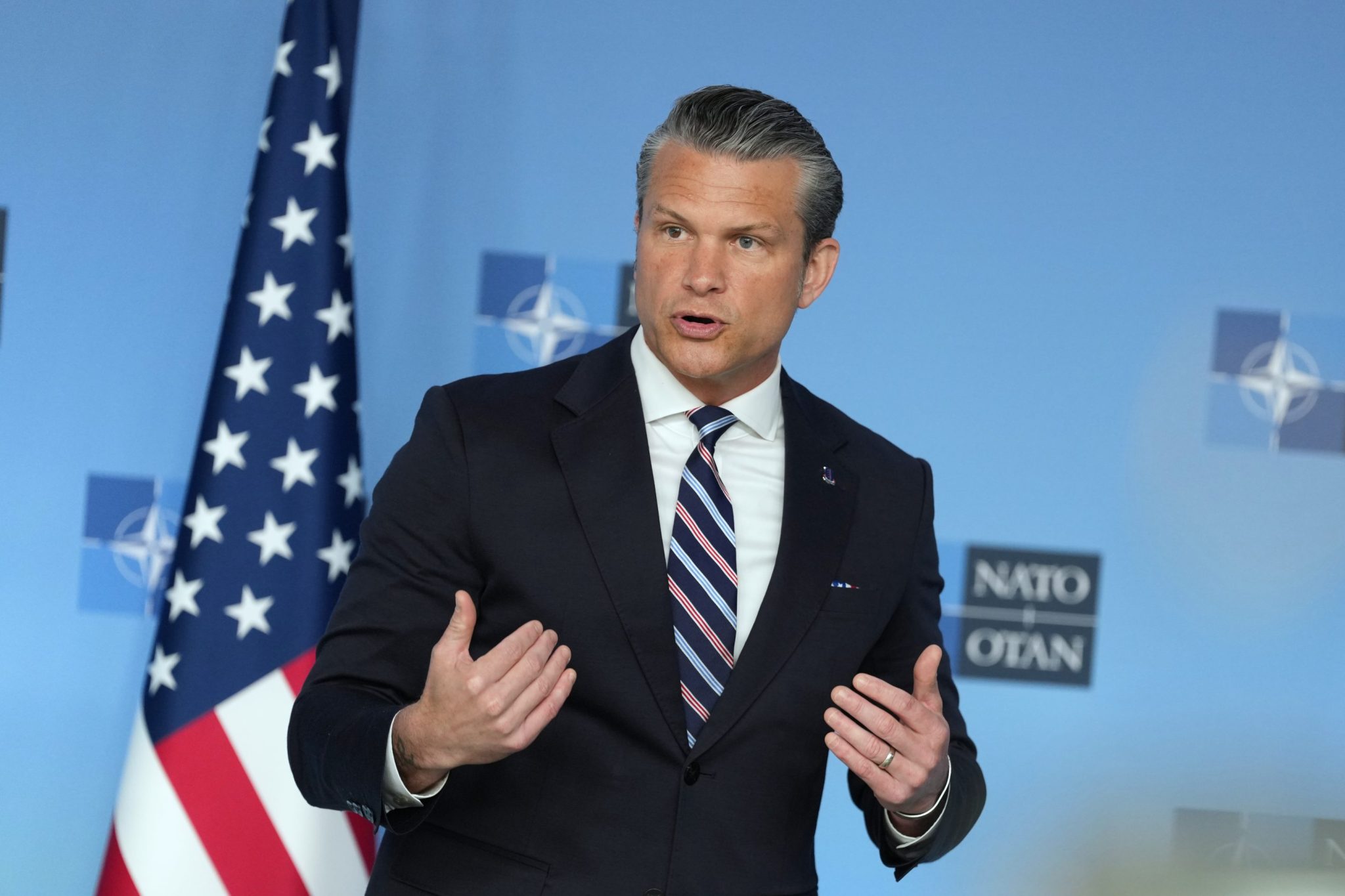
Pete Hegseth flew to NATO, told allies they might fail his review, and caught an early flight home
U.S. Defense Secretary Pete Hegseth lashed out at NATO allies on Thursday, announcing a six-month Pentagon review of American forces in Europe whose outcome will depend on how fast the Europeans take responsibility for their own security. The threat of a review was yet another surprise for European allies and Canada as they learn to deal with an increasingly unpredictable ally. U.S. officials and senior military officers had promised to coordinate closely with the Europeans as America draws down. Just weeks ago, the Trump administration said that it would no longer provide as much military support should any NATO member come under attack, leaving them scrambling to find equipment to plug any gaps. In recent months, U.S. President Donald Trump and the Pentagon have sent conflicting signals about whether America is reducing or increasing its military footprint in Europe, as well as threatening to annex Greenland, a semiautonomous island that is part of ally Denmark. “This will be a real review. It will be designed to ensure that NATO is moving fast and irreversibly toward Europe leading, stepping up to take primary responsibility for the defense of Europe,” Hegseth told his NATO counterparts. “It’s a review that some countries will fail and others will pass with flying colors.” A public dressing down over base use, gender and migration In a fiery speech at NATO headquarters in Brussels, Hegseth also lambasted European allies for failing to provide U.S. forces access to bases in Europe to launch attacks on Iran, calling it “shameful.” “These allies, they put America’s sons and daughters, our sons and daughters, at risk by denying them the predictable access, basing and overflight that never should have been in question at all,” he said. The review would also assess whether the U.S. has full access and overflight “when we need it.” While defense ministers and military officers sat in silence, Hegseth railed against migration and gender equality policies in Europe, in re