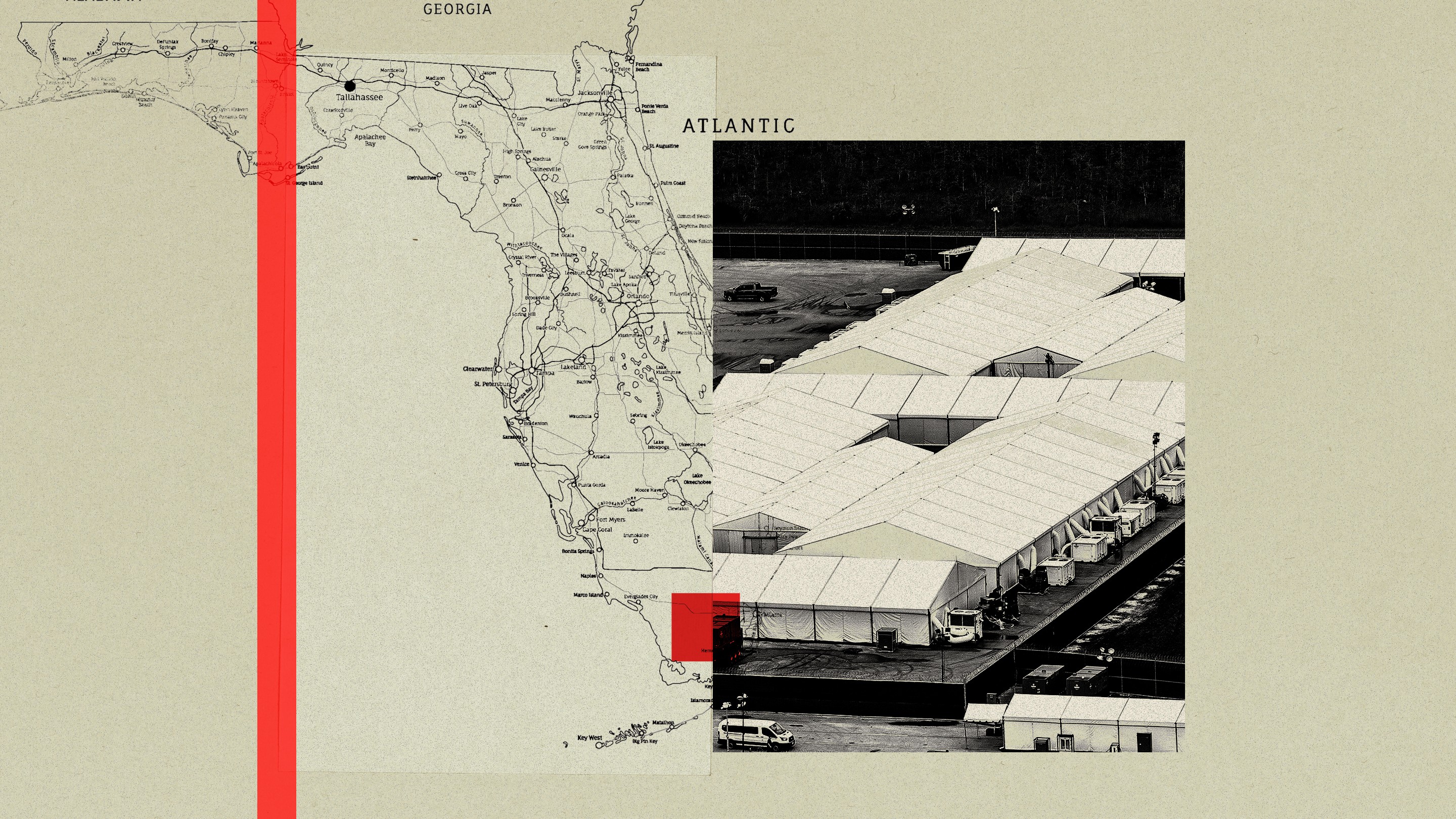
The Alligator Alcatraz Boondoggle
Since the early 1990s, I have visited scores of prisons and jails throughout the United States, as well as the Guantánamo Bay detention camp. The immigrant-detention facility known as Alligator Alcatraz, deep in the Florida Everglades, stands out as a uniquely cruel publicity stunt with an absurdly high price tag, in which much of the money goes into just a few pockets. For almost a year, the facility has been operated under an unusual arrangement: funded by the state of Florida and run by private corporations to detain immigrants on behalf of the federal government. Ultimately, the way Florida and the Trump administration went about creating Alligator Alcatraz placed them in an untenable position, legally and financially. According to recent reports, the facility may soon be shut down. Its history, however, must not be erased.The Florida Soft Sided Facility South, as Alligator Alcatraz is officially designated, was built by the state of Florida during the summer of 2025 for use by U.S. Immigration and Customs Enforcement. It is located at a remote airstrip in the Everglades, surrounded by the Big Cypress National Preserve. Alligator Alcatraz houses a few hundred employees in trailers and detains about 650 male immigrants in large tents; until a few weeks ago, the number of those being detained was nearly 1,500. By ordering its construction, Ron DeSantis, the governor of Florida, demonstrated both his loyalty to President Trump (whom he had run against for the Republican presidential nomination in 2024) and his strong public support for Trump’s crackdown on immigration. DeSantis expected that much of the cost of Alligator Alcatraz would eventually be reimbursed by the federal government. Trump attended the grand opening with Kristi Noem, then the head of the Department of Homeland Security, who promised that Alligator Alcatraz would be “funded largely” by her department.But federal funding was held up for months, thanks to an environmental lawsuit by opponents of th