History behind cities and shrines chosen for Ali Khamenei’s funeral journey
Why this matters: local context for readers following news across Pakistan and the region.
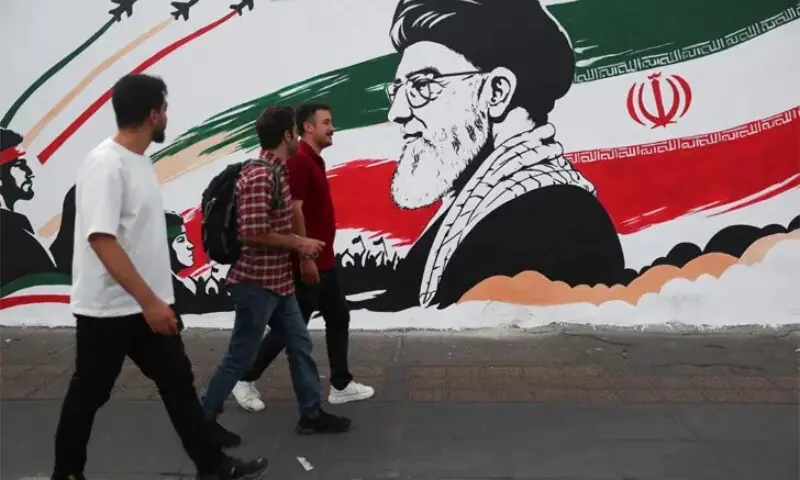
People walk past a mural with a picture of late Supreme Leader Ayatollah Ali Khamenei.—Reuters TEHRAN: The funeral ceremonies for Iran’s late supreme leader Ayatollah Ali Khamenei will pass through a series of locations that reflect the religious, political and ideological pillars of the Islamic republic. From the seat of power in Tehran to the holy cities of Qom, Karbala, Najaf and finally Mashhad, each stop holds symbolic importance. Political, religious stage. The public viewing at Tehran’s Grand Mosalla on Saturday places the deceased leader at one of the Islamic republic’s most important ceremonial venues. Built to host major Friday prayers, state commemorations and religious gatherings, the vast complex has long linked religious life and state authority. The Mosalla’s significance is as much political as it is religious. It has hosted speeches by senior officials, national ceremonies and mass events aimed at showing unity and support for the state. Holding the public viewing there highlights Khamenei’s role both as a religious authority and as the head of a political system founded on clerical rule. Farewell from the capital The funeral procession through the streets of Tehran represents a final farewell from the country’s political centre. The capital houses the presidency, parliament, judiciary, military headquarters and most major state institutions. Large gatherings and marches in Tehran are common throughout the year and have often been used to project national solidarity and state strength. The procession therefore represents both a public expression of grief and a sign of the continuity of the country’s leadership during a time of transition. Centre of Shia learning The city of Qom holds a unique place in Iran’s religious landscape. Home to the country’s most influential seminaries, it has educated generations of clerics and played a pivotal role in shaping the ideology of the Islamic republic. For Khamenei, whose authority partly came from his position