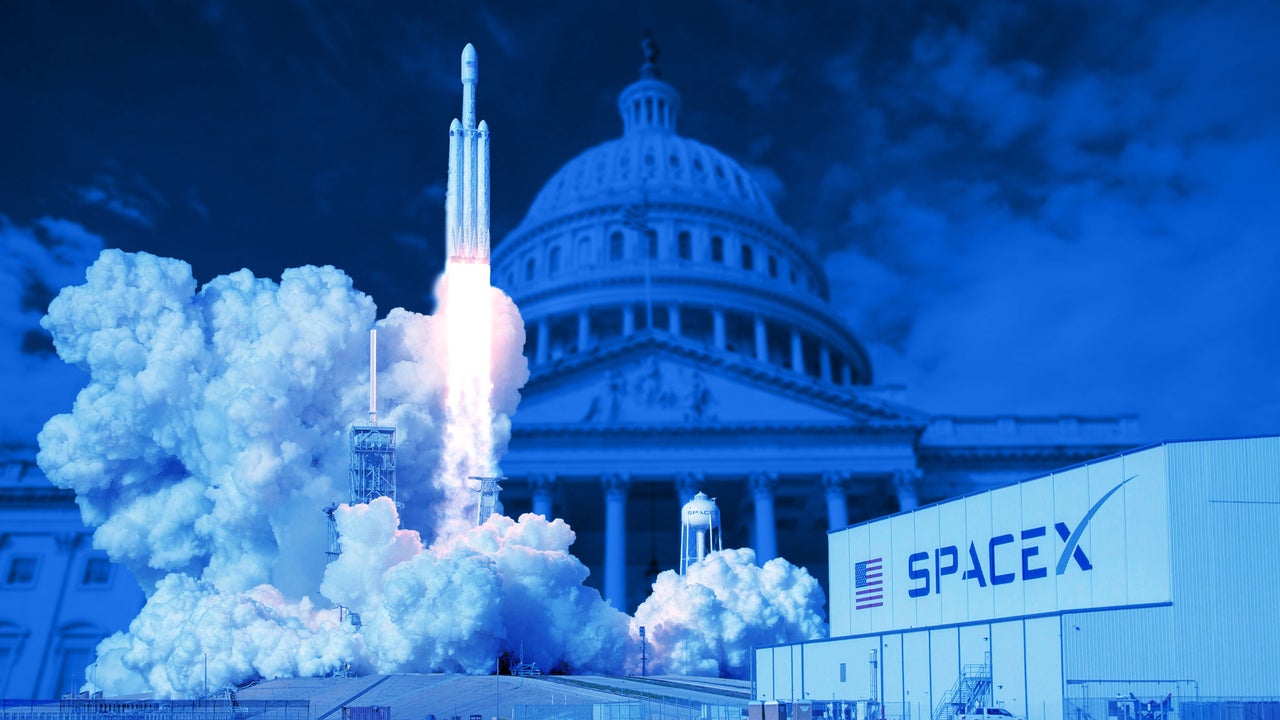
SpaceX’s biggest business risk? Politics
In a new filing with the Securities and Exchange Commission, Space X lays out ambitions that are expansive, even existential: deploying orbital data centers to build superhuman artificial intelligence, transporting humanity to Mars, and extending consciousness into the broader universe. To make any of that happen, though, Space X remains highly dependent on the U.S. government, which must clear the path toward those goals. The company’s work has long hinged on regulatory approvals and buy-in from government customers. But the filing, which paves the way for ordinary investors to finally own a stake in arguably the world’s most successful space startup, makes newly explicit just how much SpaceX’s future still depends on persuading federal officials. That dependence is becoming more politically complicated as CEO Elon Musk grows increasingly polarizing in Washington. While SpaceX has benefitted from favorable treatment in recent years, there is little reason to assume that will continue. Democrats, in particular, have grown more hostile toward Musk and his businesses, raising concerns about everything from xAI’s chatbot Grok, which has faced legal scrutiny over its nudifying feature, to Musk’s handling of the war in Ukraine, where troops rely heavily on its Starlink satellite system. More broadly, critics increasingly worry that a single billionaire has amassed too much influence over critical communications infrastructure. Musk’s close alignment with the Trump administration and the MAGA movement could further complicate SpaceX’s relationship with future officials whom the company may ultimately need to win over. A company with deep Washington ties SpaceX is already deeply entangled with the federal government. Space launches require sending powerful rockets through national airspace, a regulated public resource overseen by the Federal Aviation Administration (FAA), which must clear flights during launch windows and investigate environmental concerns tied to launches.