For Puerto Rico’s fishers, climate change isn’t the only challenge — being left to adapt alone is.
Why this matters: environmental and climate reporting with long-term consequences.
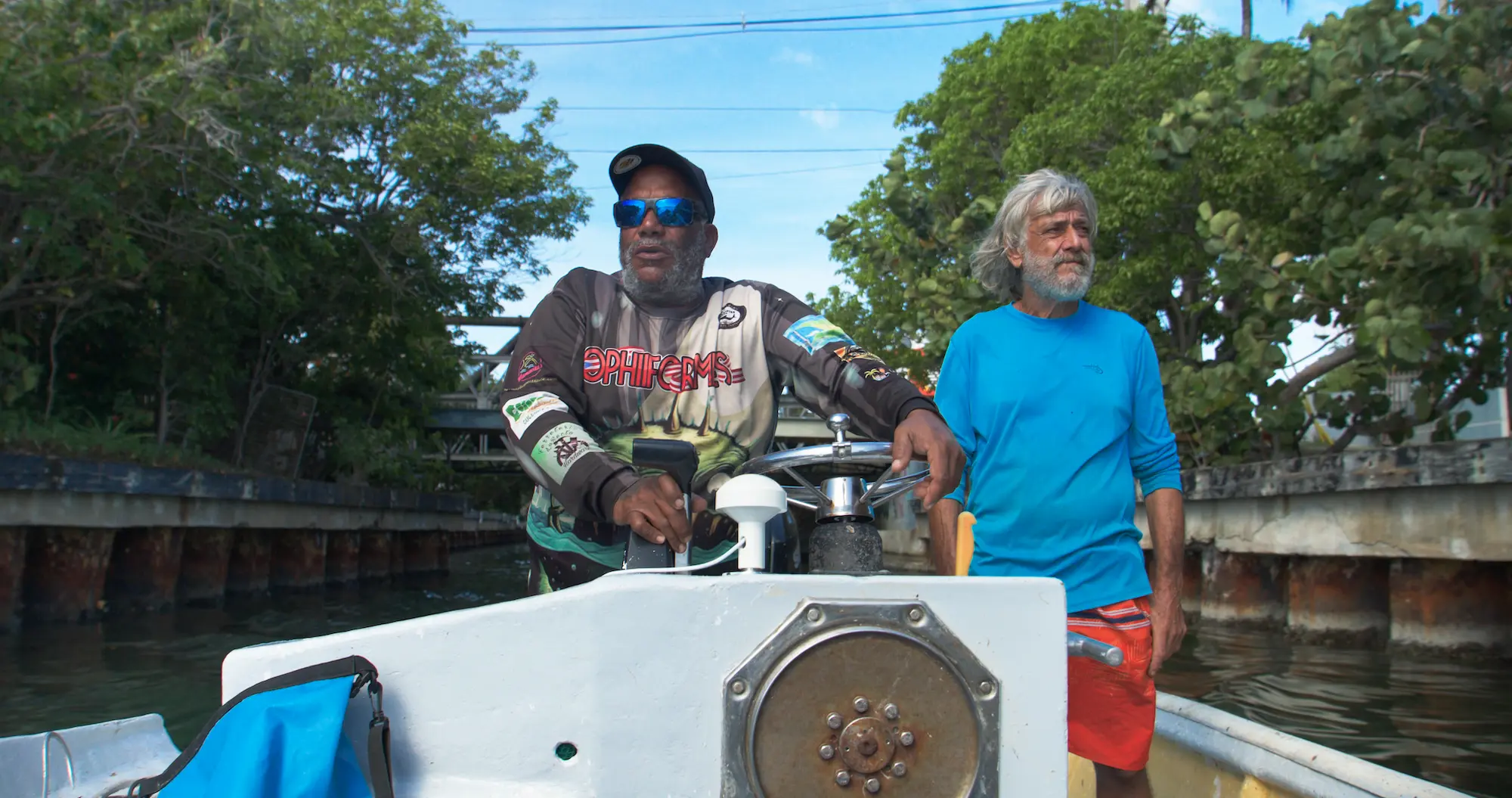
Tomás Ayala leaps off the side of a small dinghy and into the dark swell of water. His arms slice through the waves like a cutlass as he dives deep into the bay off the southeastern coast of the Puerto Rican island of Culebra. Armed with a spear gun, Ayala swims even deeper as he scans the perimeter of the reef for his target. It doesn’t take long. Mere seconds later, a cloud of blood darkens the water around a large hogfish — proof enough that he found his mark. He snatches up his catch and makes for the surface. Back safely on his boat, Ayala drops the reef fish into a cooler, guns the motor, and heads for shore. It’s late Wednesday afternoon in mid-May. Ayala has been out since before dawn. The 50-year-old hails from a family of fishers — he started free diving for reef fish, laying lobster traps, and catching octopus when he was just eight years old, following in the footsteps of his brother and grandfather. Before long, he arrives at his destination — a concrete dock leading to a villa pesquera, a “fishing village” or “fish landing center,” a site with key infrastructure for Culebra’s community of traditional fisherfolk. Inside are cleaning stations, freezers, a saltwater tank for storing lobsters, a mélange of other equipment, and a bustling market. The villa pesquera provides the equipment dozens of local fishers need to sustain their work, and also a space to convene: Every week, the association that co-manages the space comes together for updates and to share their challenges and successes. Ayala is greeted by Nicolás Gómez Andújar, a marine scientist whose dad is a local fisher, and they prepare the space for their next gathering. The members will discuss the federal permits they’re hoping to get for a native oyster farm, the effort to clear droves of abandoned fishing gear from Culebra’s seabed, and anything else someone may want to bring to the group. While they talk, they’ll eat a seafood mofongo, a popular shrimp-and-plantain dish. Ayala and Pedr