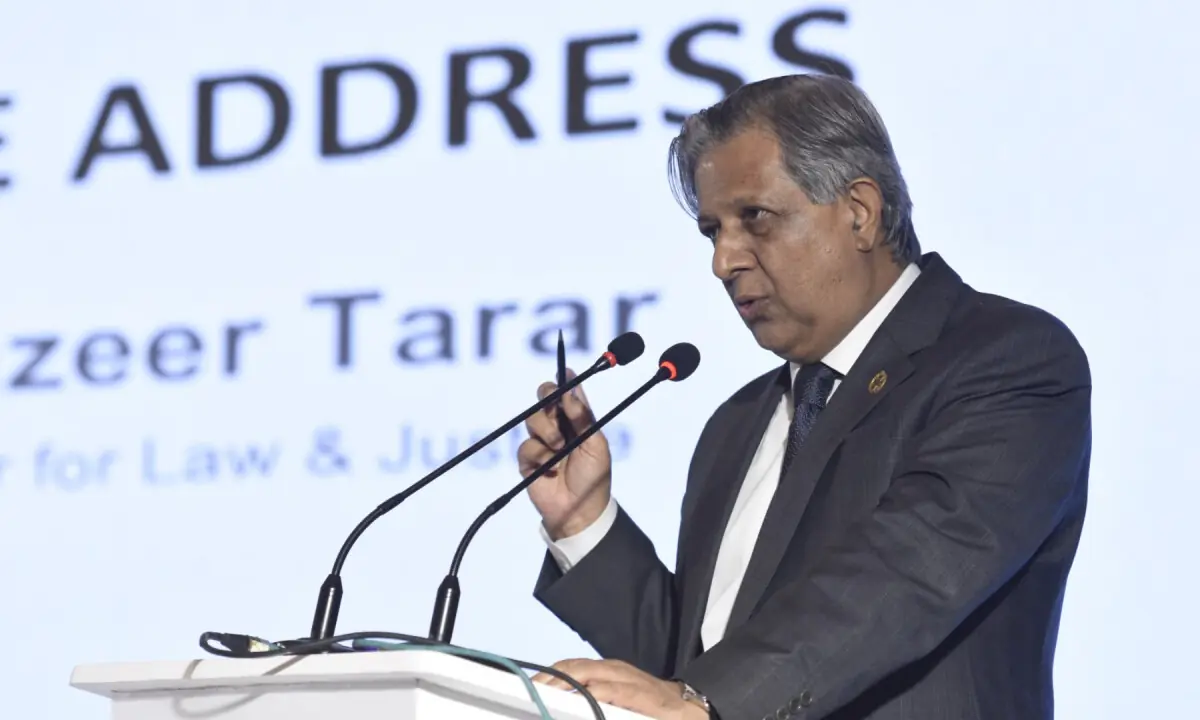
Breathe Pakistan: Law minister decries ‘lack of will’ in tackling climate crisis
Why this matters: local context for readers following news across Pakistan and the region.
The second edition of Breathe Pakistan International Climate Change Conference, organised by Dawn Media, kicked off in Islamabad on Wednesday. Despite contributing minimally to global emissions, Pakistan remains among the most climate-vulnerable nations, underscoring the critical need for coordinated, locally grounded, and globally informed responses. The two-day conference brings together policymakers, experts, and stakeholders from across sectors to examine intersecting challenges and chart a path forward. The first edition of Breathe Pakistan sparked national dialogue and global collaboration around vital climate challenges — from climate justice and finance to renewable energy transitions, disaster risk reduction, and inclusive public-private partnerships. View the full agenda here. 5:31pm — Day 1 of conference ends 5:28pm — MPA Fakhar Zaman says Sindh ‘living in reality many debate’ Sindh MPA Makhdoom Fakhar Zaman speaks at the Breathe Pakistan conference. — White Star/ Muhammad Asim Sindh MPA Makhdoom Fakhar Zaman detailed the climate realities faced by Sindh, noting that the province was “living in a reality that many still debate”. He recalled that in 2022, Sindh faced floods, displacing over 12m people. He added that the province also represented 90pc of Pakistan’s coastal exposure while the Indus Delta had shrunk by “over 90pc”. “It is not just a crisis, but a turning point,” Zaman said, stressing that Sindh should not be seen as a “victim” of climate change but rather the focus should be towards “moving from response to resilience”. “We must legislate for reality and not theory,” Zaman added. 5:25pm — Law minister urges public to ‘change its attitude’, adopt environment-friendly practices Law Minister Azam Nazeer Tarar speaks at the Breathe Pakistan conference. — White Star/ Muhammad Asim Law Minister Azam Nazeer Tarar urged the public to change its practices, especially regarding using public transport. “We drive huge vehicles for minor tasks,” he said, l