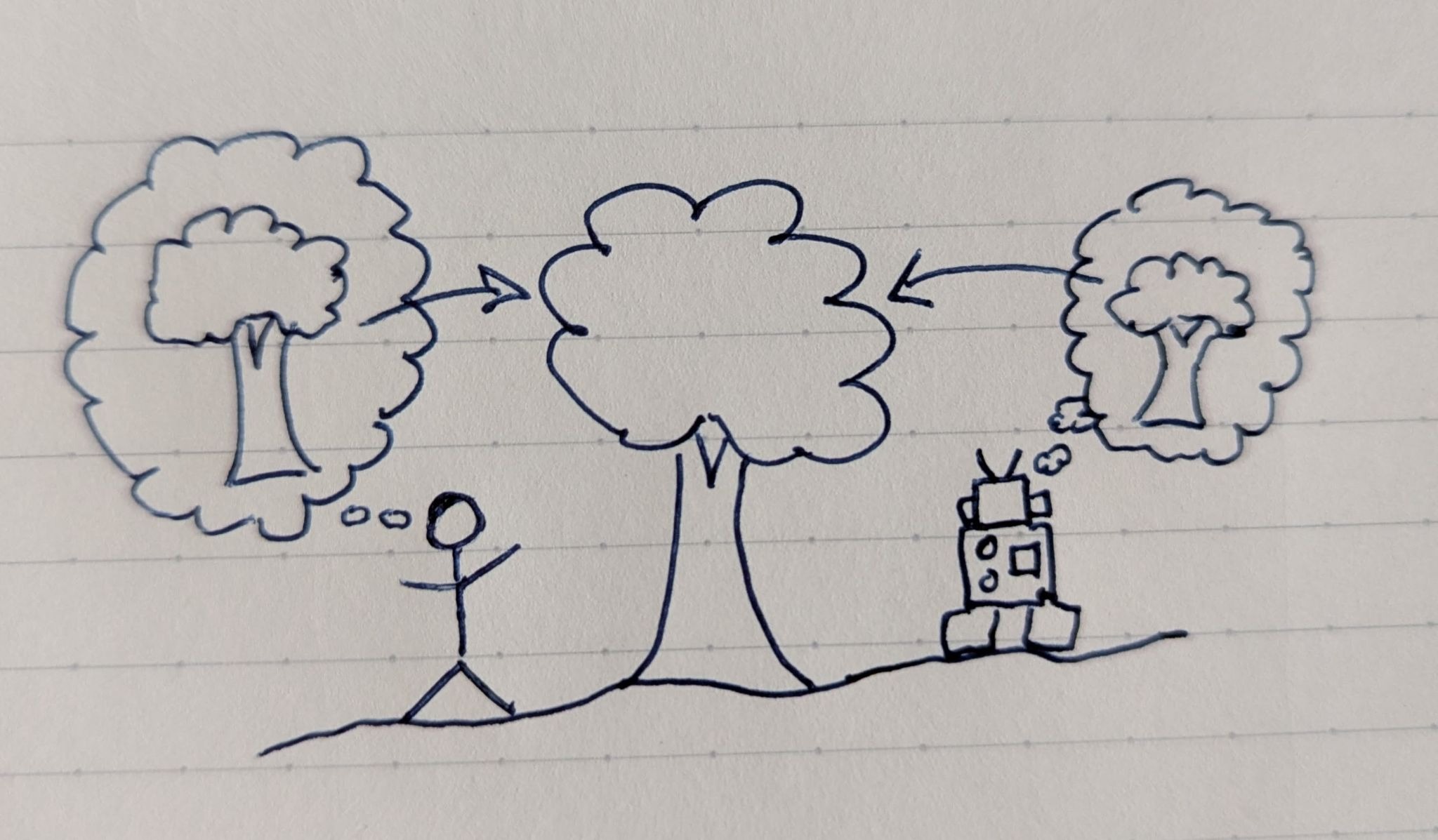
A Test Suite for Concepts
Lately I’ve been spinning up on natural abstractions, and in particular on John Wentworth’s work on natural latents. As I’ve been studying, I’ve noticed some big gaps in the existing literature. Some of my biggest questions have not been answered by existing blog posts and writeups.One of my grumps about the existing body of work has to do with the typology of concepts, and the representative examples we’re using for that typology.If we’re going to do a lot of work to talk about concepts using math, I’m going to want to work a bunch of concrete examples to some level of precision. So far I’m not happy with the list of examples, and I’m not happy with the level of hand-waving in tying the math back to the various kinds of examples.It seems to me that there are a lot of different kinds of concepts. Some concepts are “more abstract” than others – or to put it another way, some concepts map back very clearly to the physics of our universe, while others seem more fuzzy, hard to pin down, and maybe not “natural” at all. Some concepts are big clusters containing lots of varying examples; some attempt to capture one instance of a thing. Some concepts have to do with relationships between other concepts. Some concepts are reflective. And so on.I think it would be a mistake to try to build a full concept typology at this point. Ideally you want the structure of the environment you’re modeling to dictate the concept typology, not the other way around. That said, I do long to have set of example concepts to draw from as I work through some of my questions about the natural latents math – and for that set to span a bunch of different types of concepts. So I’ve cheated and used my own experience as an agent thinking about concepts to guess at some important and interesting concept types.In this post I’ll give some probably-familiar background about what we mean by concepts, and then I’ll gesture vaguely in the direction of what we need in our concept typology.Concepts that Bind t