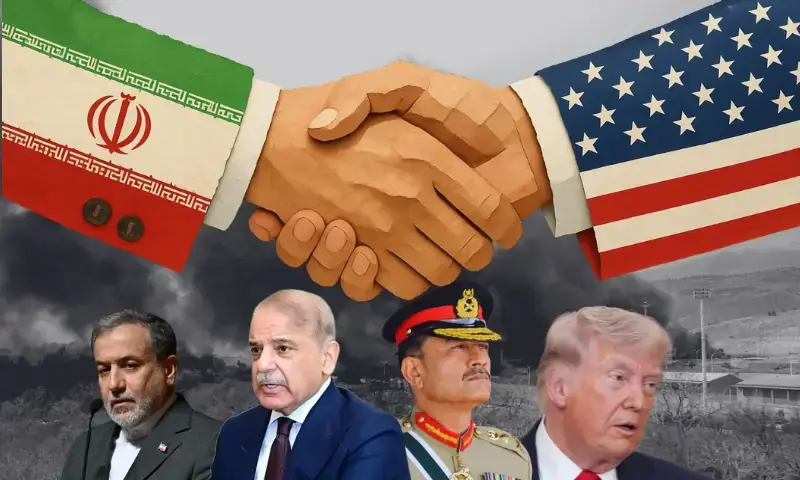
Pakistan successfully brokered peace between the US and Iran. Can it now reap the dividend?
Why this matters: local context for readers following news across Pakistan and the region.
Earlier this week, the US and Iran finally reached an agreement to stop the war. Pakistan, which played a central role in said agreement has been acknowledged and praised by the international community. But is this where it ends for the country? Or can the Shehbaz-led government convert the diplomatic visibility and influence into that rare opening that actually guarantees dividends? Before we answer that question, however, it is important to acknowledge that the agreement, brokered after weeks of intense diplomacy between the United States and Iran, is not a peace treaty. It is an interim framework that has merely paused a dangerous confrontation and created a 60-day negotiating window during which the most difficult questions, including sanctions relief, nuclear restrictions, and regional security arrangements, will have to be addressed. The fragility of the arrangement was evident even before its conclusion, with disagreements linked to Lebanon threatening to derail the process at a late stage, and Qatar eventually stepping in to facilitate implementation mechanisms and financial assurances. That reality is the first lesson Islamabad should absorb. Opening negotiations was the difficult part, but perhaps the harder task will be converting this diplomatic breakthrough into durable strategic gain. Why did Pakistan get involved? Pakistan did not involve itself in the process merely out of altruism; it had compelling reasons of its own. A prolonged Iran-US confrontation, or worse a regional war, would at a minimum have directly affected Pakistan’s security environment and economic stability. The country shares a nearly 900-kilometre border with Iran and remains heavily dependent on Gulf energy supplies. It is, therefore, vulnerable to oil price shocks and maritime disruptions, and any continuation of conflict in the Gulf would carry immediate consequences for inflation, energy security, and economic recovery. Seen in that context, Pakistan’s mediation effort was less