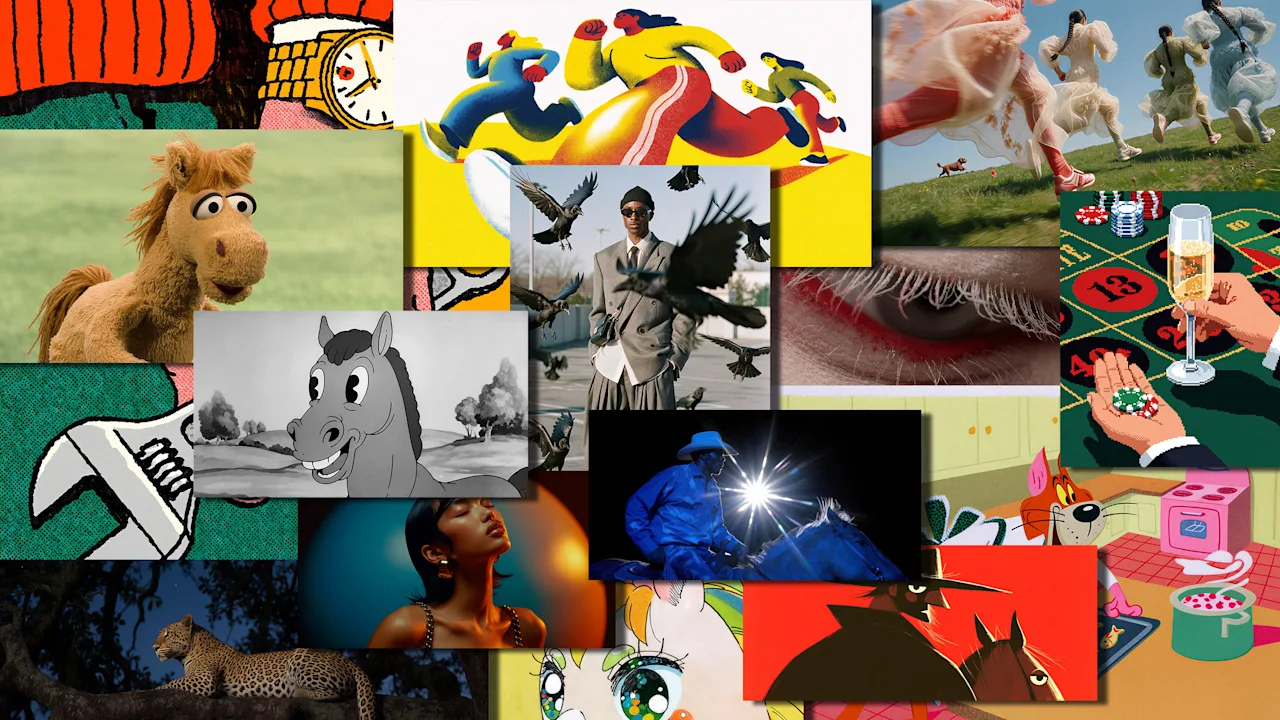
Welcome to the age of the underdog AI model
Custom AI models are not just for the AI giants anymore. Because the 37-person startup Krea is releasing its first generative AI model as the design tools startup repositions itself as a full-fledged AI research lab. The move is significant for Krea, but it also seems to tease an almost inevitable moment in the rapidly evolving AI market, where smaller players in the industry can make more disruptive bets. On one hand, Krea can hardly call itself a bootstrapped startup anymore. It’s now raised $83 million through its Series B at a $500 million valuation. On the other, it’s tiny compared to the leading frontier model companies, which constantly raise more money to ensure they have an unlimited war chest to train the next best model: OpenAI and Anthropic, which have raised $180 billion and $72 billion, respectively. But to Krea’s co-founder, Diego Rodriguez, it’s invigorating to be small, nimble, and, by one significant measure, no less successful than any frontier model company as a core business. “Until there’s a winner—until OpenAI or someone is profitable—the Olympic Games are on,” he says with a mischievous smile. The evolution of Krea Krea launched in 2023 to be something like the Adobe of the AI age, a creative platform designed from scratch to allow you to not just generate media with AI, but to tune those outputs, with controls that feel more like a synthesizer than a drafting table. They were the first to offer real-time AI editing tools and the first to put APIs from other AI models into their own app (a practice that has now become standard). And they were quickly profitable. But over time, the team has recognized a distinct ceiling to their work: Krea can only be as open-ended as the models it sits upon. Image models of today are amazing at specific prompts that often go viral, but they can also feel like they are built on rails. Creative phrasings can still lead you down the same old paths, as models fail to reproduce what’s in your mind̵