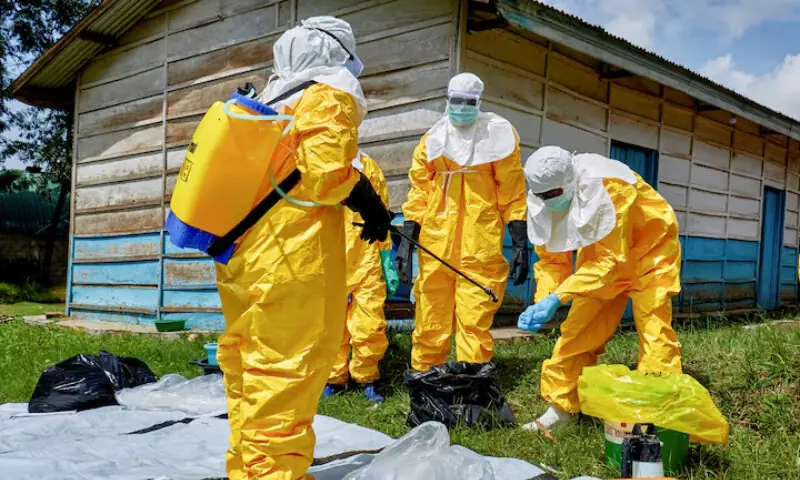
Ebola had 'big head-start' but response catching up: WHO
Why this matters: local context for readers following news across Pakistan and the region.
The Ebola outbreak raging in central Africa had a “big head-start”, the World Health Organisation (WHO) chief acknowledged Wednesday, but insisted efforts to rein in the deadly virus were making progress. The outbreak, which was declared on May 15 in the northeastern Democratic Republic of Congo (DRC), has so far been confirmed to have infected 359 people, including 61 who have died. But the actual numbers could be far higher, with the virus believed to have been spreading under the radar for some time before it was detected. “The outbreak had a big head-start and we’re still behind,” WHO chief Tedros Adhanom Ghebreyesus told reporters at the UN health agency’s headquarters in Geneva, but insisted that “we’re catching up”. Tedros, who had just returned from a trip to DRC, where he travelled to the outbreak’s epicentre in Ituri province, said he had been “very encouraged by the level of commitment I saw everywhere I went”. But challenges remain, he said, warning that “the virus is ahead of us… we need to move faster”. It has been clear from the start that the difficulties would be daunting, with the outbreak concentrated in Ituri, where decades of armed conflicts have forced millions of people from their homes and into crowded camps. Ebola patient visited UAE The region’s insecurity, limited testing capacity, lagging contact tracing and mistrust among some of the population are among the challenges facing the response, Tedros said. On top of that, no vaccine or approved treatment exists for Bundibugyo, the rare strain of Ebola behind the current outbreak. Ebola, which is passed on through close contact and bodily fluids, has killed more than 15,000 people in Africa over the past 50 years. The current outbreak — the 17th to hit the DRC — has to date seen 344 confirmed Ebola cases across three of the country’s provinces, including 60 deaths, said the WHO. The UN health agency also tallied 116 suspected cases of the disease. Fifteen cases, including one death, have also