Beyond the lexical personality traits: What is the structure of personality?
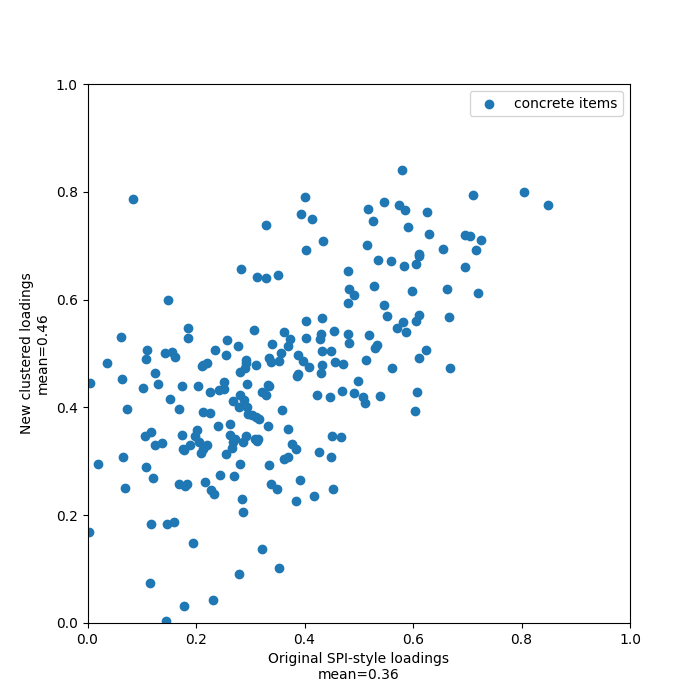
This is a description of the methodology behind the latest iteration of my Targeted Personality Test. Feel free to take it either before or after reading the article. This post can also be read at my Substack. Thanks to Justis Millis for providing feedback and proofreading on this post. In my prior post “Which personality traits are real? Stress-testing the lexical hypothesis”, I observed that a lot of the personality traits that are measured by conventional personality tests are not very “real”: they lump together nearly unrelated behaviors. Can we do better?Thanks to a lot of anonymous respondents to my test[1], I think yes! I factor-analyzed the data from my Targeted Personality Test, and came up with a hierarchical personality model which hopefully should be better at cutting personality-space at its joints.Quick recap: The problemEmpirical personality models are built on correlations. If a cluster of variables are all correlated with each other, then we assume that there is a latent personality factor accounting for these correlations, and we score the factor using an aggregate of the correlating variables.However, the standard datasets with which these correlations are computed include lots of near-synonymous item pairs such as “I am sensitive to the needs of others” vs “I am concerned about others”. Because these are near-synonymous, they will tautologically end up correlated with each other regardless of the underlying structure of personality. The data analysis risks mapping out the clusters of synonyms, rather than the actual traits we wanted to know about.My solution: Narrow itemsI took people who scored high and low on traits in a traditional personality test (the SPI-81-27&5) and asked them what they had in mind with their responses. This gave me concrete descriptions; for instance someone who agreed to “Compassion” questions like “I am concerned about others” wrote:I would not see someone go without something that I had in abundance, if I see a homeles