Analysis: Energy-efficient air conditioning could save Indian homes 69bn rupees a year
Why this matters: environmental and climate reporting with long-term consequences.
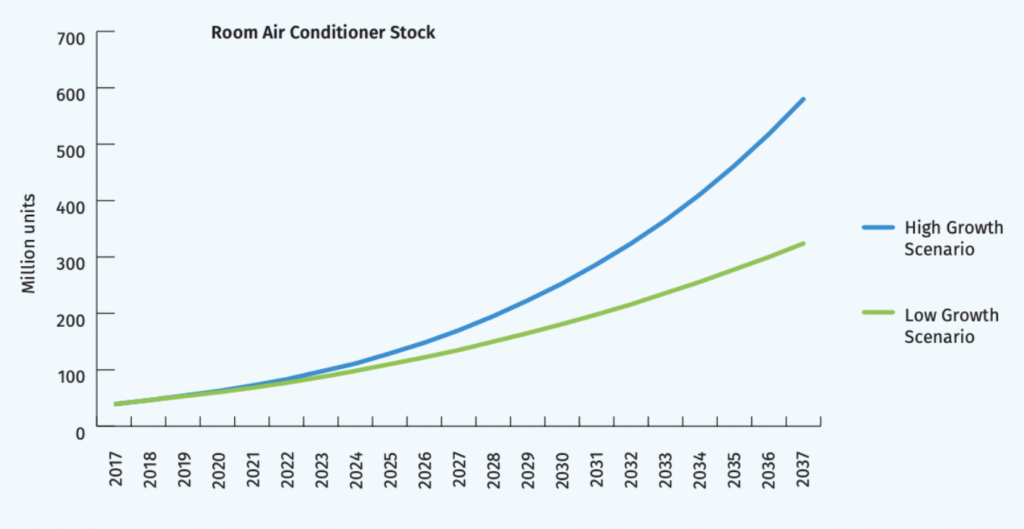
More energy-efficient air-conditioning units could, together, save Indian households ₹69bn ($724m) a year, according to new analysis by Carbon Brief. Climate change-induced extreme heat is driving up the use of air conditioning across the country, as people try to cope with record-breaking temperatures. This demand, however, is straining the country’s power grid and raising emissions. On 21 May 2026, India’s power demand reached a record 270 gigawatts (GW), fuelled by a heatwave sweeping across the country and a surge in air-conditioning demand. Carbon Brief’s analysis shows that, if the roughly 15m households expected to buy a new air conditioning (AC) unit this year bought a “five-star” rated one instead of a “two-star”, it would cut carbon dioxide (CO2) emissions by nearly 5m tonne (Mt). The installation of AC units in India is currently uneven and ongoing challenges remain, predominantly around the cost of the technology. Below, Carbon Brief looks at what more energy-efficient models would mean for India’s emissions and household electricity savings, as well as opportunities and barriers to cooling access. Record heat Historically, India has had one of the lowest levels of access to cooling in the world. As the nation continues to see an increasing number of heatwave days, this is shifting. For example, India saw record-breaking heat in 2024 and nearly 14m air conditioners sold – up from 10m in 2023. Between 2021 and 2023, AC sales volumes increased by more than 25% year-on-year in India. While solar power is playing an increasing role in meeting the daytime electricity demand from these units, coal power plays a significant role in powering air conditioners on warm nights. By 2037, India’s space-cooling demand was expected to grow nearly 11-fold in a business-as-usual scenario compared to 2017, according to the government’s 2019 India Cooling Action Plan (ICAP). According to a World Bank study, this would mean a new air-conditioning unit is bought every 1