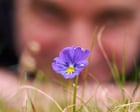
Blossoming among spoil heaps: how 1,000 years of lead mining gave birth to banks of pansies and pennycress
Why this matters: environmental and climate reporting with long-term consequences.
Calaminarian grassland is a rare habitat where plants thrive in soils contaminated by heavy metals. But should these toxic meadows be protected or allowed to fade away?At first, the small purple flowers are hard to spot in the weak May sunshine. Slowly the drifts of delicate mountain pansies, along with the white rosettes of alpine pennycress, begin to jump out, scattered across an area little bigger than a football pitch, on the banks of the River Allen in Northumberland.This is a pocket of calaminarian grassland, an increasingly rare habitat where specialist plants called metallophytes have adapted to live in soils deeply contaminated by heavy metals, the legacy of more than 1,000 years of lead mining. Continue reading...