Lock-In Risk Needs More Researchers; Here's Where to Start
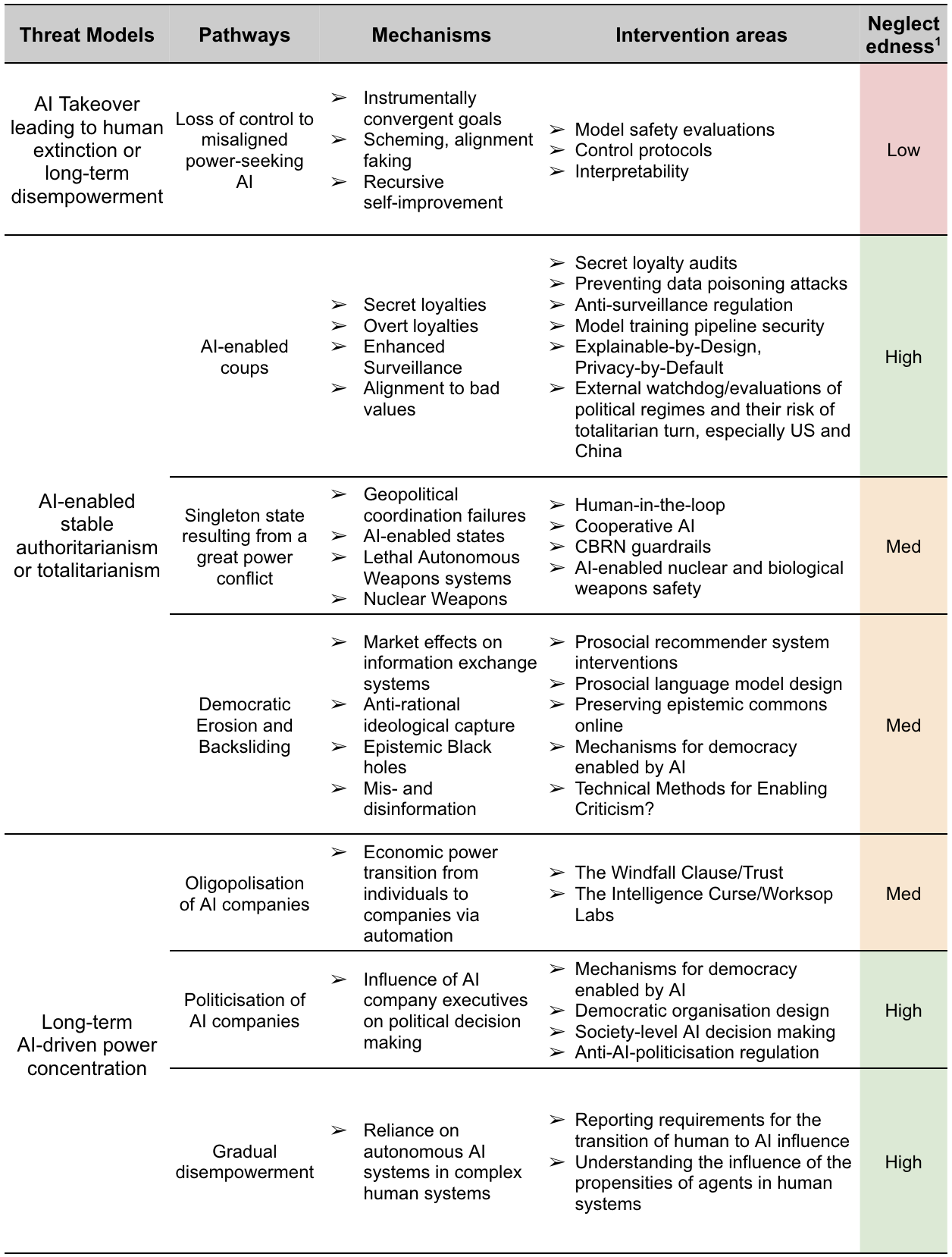
Epistemic status: slightly outdated ideas, only a shallow interpretation of many areas, a somewhat arbitrary taxonomy, and posted because I can't prioritise spending more time on this but think it should be public.Lock-in risk research is neglected and potentially very high impact. I’ve done some thinking about the threat models for lock-in over the last year while starting Formation Research, and I’m now writing them up in this post. Both to put the ideas in my head into writing, and make something that can be shared with the broader community.Lock-In is a ProblemThe concept of AI lock-in originally came from Nick Bostrom in 2005, and William MacAskill as recently as 2025. For the purposes of this post, I’ll use lock-in to refer to a situation where some feature of the world, typically a negative element of human culture, becomes stable for a long time (i.e., centuries, millenia, or longer).This definition is okay, but it’s a bit vague, and persistent path dependence as described by MacAskill might be a more precise term. But memetically, I think the word lock-in along with this definition is succinct enough to get the important point across. It highlights a category of bad outcomes for humanity (in which AI is a core technology) that are neglected by much of current technical AI safety and governance work.My definition may not be very useful for creating positive outcomes beyond being a guide to the threat models, and even a precise definition remains extremely hard to operationalise. What could cause persistent path dependence? What do we do about it? This post is meant to clarify what I’ve converged on after a year of thinking about the problem.Here Are The PathwaysTable: diagram of threat models, pathways, mechanisms, intervention areas, and my ranking of their neglectedness in the AI safety research landscape.This diagram has been written for the purposes of identifying promising interventions. I am not suggesting that lock-in may emerge from one discrete path