Tooth from Siberian cave reveals Neanderthal dental surgery
Key takeaways
- Add ARY News on Google AAResize About 59,000 years ago, a Neanderthal suffered from an awful toothache caused by a deep cavity in one of the molars on the lower jaw.
- The tooth was unearthed in Russia at Chagyrskaya Cave, the site of a rich assemblage of Neanderthal fossils on the left bank of the Charysh River in the foothills of the Altai Mountains in southern Siberia.
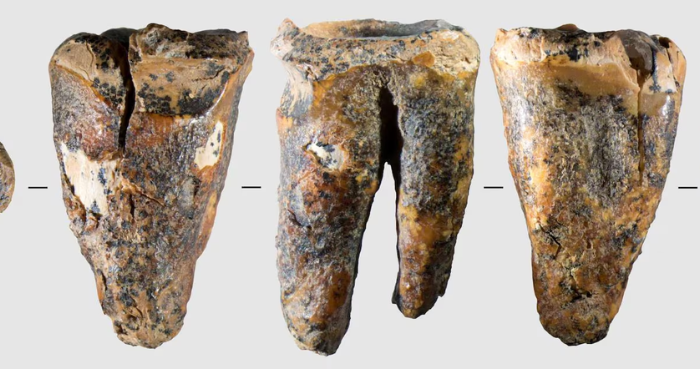
- At the center of the molar is a deep hole reaching into the pulp chamber, where the nerve endings and blood vessels were located.
Why this matters: local context for readers following news across Pakistan and the region.
Add ARY News on Google AAResize About 59,000 years ago, a Neanderthal suffered from an awful toothache caused by a deep cavity in one of the molars on the lower jaw. That tooth has now been discovered inside a Siberian cave, bearing signs of dental surgery apparently performed with a small stone tool to remove decay and relieve pain.
Researchers said this tooth shows Neanderthals were capable of performing such complex dental procedures tens of thousands of years before our own species did so – more evidence showing the cognitive abilities and technical skills of these extinct close cousins of Homo sapiens.
The tooth was unearthed in Russia at Chagyrskaya Cave, the site of a rich assemblage of Neanderthal fossils on the left bank of the Charysh River in the foothills of the Altai Mountains in southern Siberia.